

Introduction: Why Absurdist Humor Defies Explanation and Demands a Curated List
Have you ever watched a comedy that made you laugh, but you had no idea why? Maybe the joke had no punchline. Or a character did something completely random, and it just worked. That is absurdist humor in action.

It breaks all the rules of traditional comedy.
Here is the thing. Absurdist humor does not follow the setup-punchline structure we expect. It challenges how we think about jokes altogether. Sometimes it leaves us puzzled. Other times it delights us for reasons we cannot explain. This is what makes searching for the best comedy movies in this style so tricky. You cannot just look for a list of funny films. You need context.
The roots of this kind of comedy go way back. Even in the silent film era, which began in the mid 1890s, comedians used physical gags and strange situations to make audiences laugh without a single word.
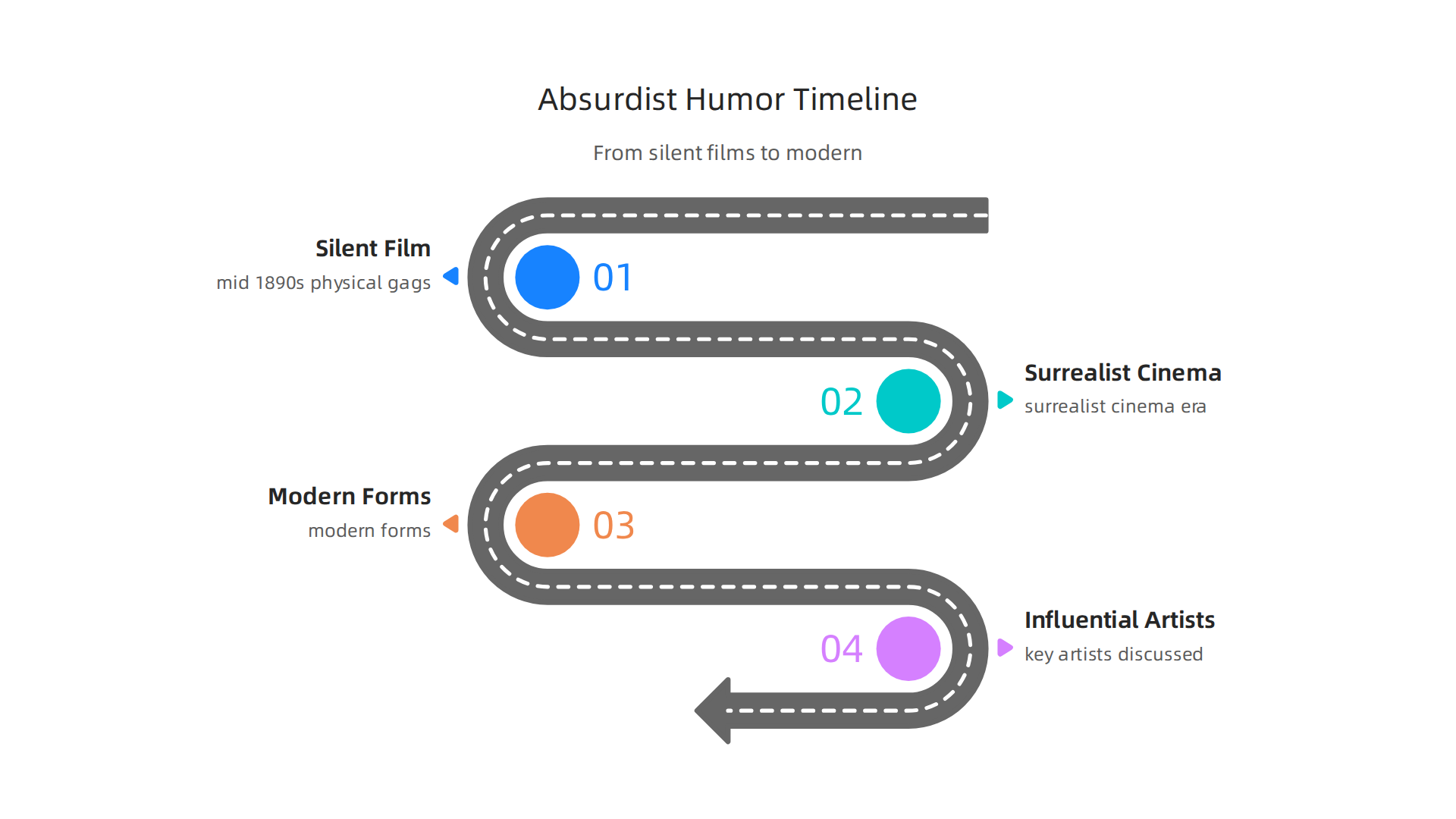
That early foundation of visual humor still influences absurdist comedy today. To really get it, you need to understand the history and the mechanics behind it.
That is where this guide comes in. We have put together a curated list of absurdist comedy films that actually matter. Each one adds something unique to the genre. If you want to understand why Wes Anderson movies feel so strangely charming or how The King of Comedy still feels fresh, we have you covered. For a deeper look at how these techniques work across different cultures, check out our analysis of Indian alternative cinema absurdist humor techniques and case studies. And if you are ready to dive into a world where logic takes a backseat, Read Book 1 and enter a universe built around strange logic and smarter laughs.
1. The Silent Era: Chaplin, Keaton, and the Birth of Absurdity
Picture a man hanging off the face of a clock tower, completely calm. That is Buster Keaton.

He never smiled, no matter how wild the stunt got. That deadpan reaction to impossible situations is pure absurdist humor. Long before anyone used the word, silent film comedians were building comedy on physical gags and surreal set pieces that bent reality. The silent film era began in the mid 1890s and ran until the late 1920s, when sound technology took over. During those years, stars like Charlie Chaplin and Buster Keaton created some of the best comedy movies ever made.
Chaplin used his Little Tramp character to poke fun at factories and machines. In Modern Times, he gets swallowed by gears. That is a joke about how work can crush us. Keaton, on the other hand, built impossible worlds. In The General, he drives a train through a bridge collapse and never flinches. Both comedians relied on visual storytelling to make audiences laugh without a single word. Their work set the stage for everything that came after.
If you love how Keanu Reeves uses deadpan humor in films today, you can see the same roots in Keaton. Check out our breakdown of Keanu Reeves absurdist humor and the secret behind his deadpan comedy genius to see how that style evolved.
Want to explore more stories where logic takes a backseat? Visit Ridiculous and step into a universe of strange, smart laughs.
2. Surrealist Cinema: From Buñuel to Dalí
Silent comedians bent reality with physical stunts. Surrealist filmmakers bent reality inside your head. This movement exploded in the 1920s, right as silent films were fading. It rejected normal storytelling and used dream logic, strange images, and shocking pairings to wake audiences up.
The king of surrealist cinema is Luis Buñuel. In 1929, he teamed up with painter Salvador Dalí to make Un Chien Andalou. That film has one of the most famous moments in history of film: a man slicing a woman’s eye with a razor. It’s not funny in a traditional way. It’s meant to disturb, to make you feel the absurdity of existence.
Buñuel and Dalí didn’t care about punchlines. They cared about showing how weird life actually is. Their work influenced generations of comedians who use strange cuts and impossible situations. You can see this today in directors like Wes Anderson, who builds dollhouse worlds where characters act with perfect deadpan logic.
If you want to see how this kind of surreal comedy shows up across cultures, take a look at our analysis of Indian alternative cinema absurdist humor techniques.
Sometimes the best comedy movies are the ones that break the rules you didn’t even know existed.
Want more stories where logic takes a backseat? Visit Ridiculous and step into a universe of strange, smart laughs.
3. Monty Python and the Comedy Revolution
Surrealist filmmakers like Buñuel and Dalí bent reality inside your head. Monty Python took that same spirit and brought it to your living room. Starting in 1969 with Monty Python’s Flying Circus, this British comedy group changed how we think about funny.
Instead of normal punchlines, Python gave us dead parrots, argument clinics, and knights searching for a holy grail.

They used Camus’ idea of absurdism to critique society in a way that feels fresh even in 2026. As one analysis shows, they pointed out the chaos and futility in life, but instead of getting sad, they showed how hilarious it all can be.
The group’s secret was collaboration. Six writers bounced ideas around, and the rule was: no rules. A sketch could end with someone saying "And now for something completely different." No setup. No payoff. Just pure silliness.
This anti-humor style made Monty Python and the Holy Grail one of the best comedy movies of all time. It influenced everything from The Simpsons to modern sketch shows. If you want to see how this kind of rule-breaking humor shows up in other cultures, take a look at our analysis of Indian alternative cinema absurdist humor techniques.
Want to explore more stories where logic takes a backseat to laughs? Visit Ridiculous and step into a universe built on strange, smart comedy.
4. The Coen Brothers: Absurdism Meets Americana
If Monty Python showed absurdism could be silly, the Coen Brothers proved it could be dark, sharp, and deeply American. Their movies exist in a slightly tilted version of our world.
Take The Big Lebowski. The Dude just wants his rug back. Instead, he gets pulled into a confusing crime plot. The whole movie laughs at the idea that we can control anything. As one exploration of absurdist humor notes, life is full of chaos and futility. The Coens just point out how funny that can be.
Then there is Burn After Reading. It takes a serious spy thriller and fills it with gym employees and stupid people. The ending is famously bleak and funny at the same time. This mix of noir, farce, and philosophy is hard to pull off. But the Coens make it look easy.
Their characters stumble forward with blind confidence. This is the philosophy of absurdism in action. We search for meaning in a chaotic world, and the Coens show us how funny that search looks. For a closer look at how performers use this deadpan style, check out our analysis of Keanu Reeves absurdist humor and the deadpan comedy genius.
By blending these elements, the Coens created some of the best comedy movies ever made. Their tone is so unique that people call it "Coenesque." It values the strange journey over the tidy ending.
Want to explore more stories where logic takes a backseat? Visit Ridiculous and step into a universe built on strange, smart comedy.
5. Wes Anderson’s Meticulously Weird Worlds
While the Coen Brothers let chaos drive the story, Wes Anderson does the opposite. He builds worlds so controlled they feel like dollhouses. Every frame is perfectly symmetrical. The colors are chosen with care. And the characters speak in a flat, deadpan tone that treats tragedy and silliness the same way.
This tight control is exactly what makes Anderson’s absurdism so unique. Life in his movies is not random. It is carefully arranged to look like it makes sense. But underneath, the same chaos lurks. Look at The Grand Budapest Hotel. A hotel concierge fights for a painting inheritance while war breaks out around him. The movie treats death and violence with bright colors and polite dialogue. It is dark, but it never stops being whimsical.
The same happens in Moonrise Kingdom. Two kids run away together. Adults panic. Yet the film feels like a sweet summer adventure. Anderson asks us to take the pain seriously and laugh at the same time.
This blend of style and strange emotion makes his work some of the best comedy movies in modern cinema. He proves that a world built with perfect control can still be wonderfully weird.
For more on how performers use that calm, dry style, check out our look at Keanu Reeves absurdist humor and the deadpan comedy genius.
If you enjoy worlds where logic is gently twisted, why not explore a universe built on smarter laughs? Visit Ridiculous and discover a series that treats strange logic as an art form.

6. International Absurdism: French, Italian, and Japanese Gems
Absurdist comedy is not just an American thing. Some of the most creative best comedy movies come from other countries. Each culture brings its own flavor: French farce, Italian surrealism, and Japanese deadpan.
Take French cinema. A classic example is Delicatessen (1991), a dark comedy set in a post-apocalyptic butcher shop. The BFI includes it on their list of great foreign comedies. It mixes slapstick, cannibalism jokes, and romance in a way that only French absurdists can pull off.
Italy offers a different kind of weird. The Great Beauty (2013) is a surreal journey through Rome’s high society. It feels like a dream you cannot wake up from. The humor comes from beautiful people doing ridiculous things with total seriousness.
Then there is Japan. Tampopo (1985) is a "ramen western" that treats noodle-making like an epic quest. The deadpan delivery of its characters makes every scene funnier.
These international gems prove that absurdist humor knows no borders. If you enjoy exploring comedy from other cultures, you might like our deep dive into how Indian alternative cinema uses absurdist humor techniques to tell unique stories.
And if these films make you hungry for more strange worlds, Explore the Series that mixes weird logic with smarter laughs.
7. Animated Absurdity: Rick and Morty, Adventure Time, and Beyond
Animation takes absurdity to a whole new level. Physical limits disappear. You can have infinite dimensions where a talking pickle is a genius. You can build a world shaped by existential dread and toddler logic. This is why some of the best comedy movies of our time are actually animated series.
Rick and Morty is the king of nihilistic absurdism. The show jumps from intergalactic adventures to family drama without blinking. It uses science fiction as a tool to explore how meaningless everything is. But the jokes land because the characters feel real. You laugh at Rick’s misery because you see yourself in it. The show defined a generation of humor that mixes smart writing with total chaos.
Adventure Time takes a different path. It looks sweet and colorful, but it uses surreal logic to talk about loss, identity, and growing up. Characters speak in non-sequiturs. The rules of the Land of Ooo change whenever it feels right. That playful weirdness made it a cultural touchstone for both kids and adults.
If you love how these shows use deadpan delivery to land big jokes, you might enjoy our analysis of how Keanu Reeves uses absurdist humor to create unforgettable moments.
And if you want more stories that break the rules of logic, view the series where cosmic confusion becomes sharp, funny fiction.
8. Postmodern Meta-Comedies: The Big Lebowski, Adaptation, and Swiss Army Man
What happens when a comedy stops telling a simple joke and starts poking fun at itself? That is the magic of postmodern meta-comedies. These films are not just about making you laugh. They want you to notice how stories work. They mix genres, break the fourth wall, and laugh at their own rules.
The Big Lebowski is a perfect example. The Dude wanders through a noir mystery that barely makes sense. The film mocks the very idea of a hero. Every character seems to know they are in a movie. That self-awareness makes it one of the best comedy movies of the 1990s.
Then there is Adaptation. Nicolas Cage plays a screenwriter trying to adapt a book that has no plot. The movie literally argues with itself. It is a comedy about the struggle to write a comedy.
And Swiss Army Man (2016) takes absurdity to a weird new level. A man befriends a farting corpse. But underneath the gross jokes, the film asks deep questions about loneliness and meaning. It redefines what a comedy can be.
This kind of meta-humor is not just an American thing. Some of the best comedy movies around the world use self-aware storytelling. The BFI highlights foreign comedies that play with form, from French farces to Czech surrealism.

If you want to see how different cultures break the rules of storytelling, check out our analysis of absurdist humor in Indian alternative cinema.
If you love movies that laugh at themselves, you might also enjoy books that do the same. View the series where cosmic confusion becomes sharp, funny fiction.
9. The Mechanics of Nonsense: Dialogue, Non-Sequiturs, and Anti-Jokes
Meta-comedies break the rules of storytelling. But absurdist humor breaks the rules of language itself. It uses specific tools to create that feeling of joyful confusion.
Let’s look at the toolbox.
Non sequiturs are statements that don’t follow from what came before. A character says: “I need to buy milk.” The other replies: “Have you ever noticed that clouds taste purple?” The brain tries to find a connection. There isn’t one. That mismatch creates the laugh. Psychologists call this incongruity theory. You expect one thing and get something completely different.
Anti-jokes take this even further. You set up a classic joke structure, then refuse to deliver the punchline. Or you give a flat, boring answer. The humor comes from the failed expectation. This is a form of benign violation where the violation is breaking the unwritten contract of joke telling.
Logical fallacies also work well. A character uses terrible reasoning and treats it as perfectly sound. “All birds fly. Penguins can’t fly. Therefore, penguins are not birds.” The audience sees the error, but the character doesn’t. This creates the same delightful disorientation you find in some of the best comedy movies like The King of Comedy, where the hero’s logic is completely broken.
Understanding these mechanics helps creators craft authentic nonsense, not just random weirdness. For deeper examples, read our breakdown of absurdist humor in Indian alternative cinema. And if you want to see these tools in a full story, Read Book 1 where every line is built on this kind of strange logic.
10. Psychological and Philosophical Dimensions of Absurdist Humor
Why do some people love absurd humor while others just shrug? The answer lives at the intersection of philosophy and psychology. Absurdist humor has deep roots in existential philosophy. Thinkers like Albert Camus and Søren Kierkegaard argued that life has no inherent meaning. The absurd arises when we look for meaning and find none. Laughing at that gap is a healthy response.
Psychologists explain the reaction through incongruity theory. Your brain expects a logical pattern, then gets something completely unexpected. That mismatch triggers laughter. This is why Wes Anderson movies feel so delightful. Everything is symmetrical and precise, but the characters act like they live in a different universe. The incongruity becomes the joke.
Research shows that people who appreciate absurdist humor tend to score higher on openness to experience. They also show more cognitive flexibility. They can hold two contradictory ideas at once and find the play in that tension. This is the same mental skill that makes someone enjoy existential fiction or surreal comedy.
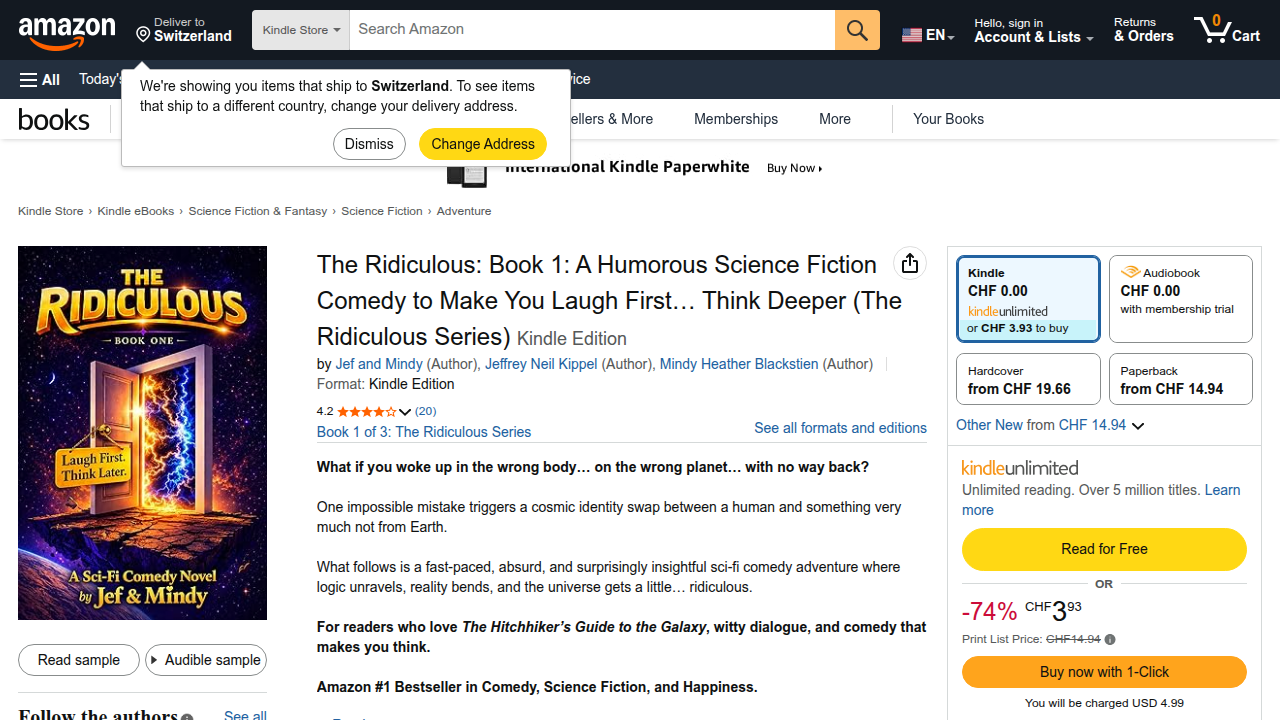
If you want to see these ideas at work in a full story, explore how surreal logic drives character behavior in Indian alternative cinema. And for a direct experience where existential philosophy meets absurd laughs, Read Book 1.
11. Essential Reading and Viewing for the Absurdist Fan
Now that you understand the psychology behind absurdist humor, it is time to put that knowledge into practice. The best way to deepen your appreciation is through the books and films that define this strange style.

Books That Explain the Absurd
Start with The Theatre of the Absurd by Martin Esslin. This foundational book breaks down the plays of Samuel Beckett, Eugène Ionesco, and others who built the genre. It shows you why their work still feels fresh today. Another great read is The Humor Code by Peter McGraw and Joel Warner. This book travels the globe to uncover what makes things funny, including the incongruity theory that explains why unexpected twists make us laugh.
Films That Show the Absurd in Action
The best comedy movies in this space do not follow normal rules. Wes Anderson movies are a perfect example. His films use perfect symmetry and deadpan delivery to create a world that feels slightly off. The Grand Budapest Hotel and The Life Aquatic are essential watches.
The King of Comedy by Martin Scorsese pushes the limits of uncomfortable laughter. It follows a fan who takes his obsession too far. And The Book of Life uses Mexican folklore and surreal visuals to tell a playful story about life and death.
Where to Go Next
If you want to experience absurdist logic in a complete fictional universe, View Series and see how surreal comedy builds worlds. Ready to create your own absurd work? Contact Us to discuss workshops and resources.
12. Building Your Own Absurdist Comedy Watchlist
You have the books and films from the last section. Now it is time to build your own watchlist. The goal is to mix the classics with hidden gems you have never heard of.
Start with the obvious picks. The King of Comedy shows how discomfort can turn into laughter. Wes Anderson movies use perfect framing to make everyday life feel strange. But do not stop there. Films like The Book of Life prove that cultural traditions can fuel surreal storytelling in unexpected ways.
Look for the best comedy movies that push boundaries in 2026. Some of the most exciting absurdist work is coming from independent filmmakers and international cinema. Check out edgy comedy movies that redefine humor this year. These films challenge what you expect from comedy.
One way to build your list is to pick a theme or director. Watch everything from one filmmaker you love. Or explore how different countries use absurdist humor. For example, Indian alternative cinema blends surreal comedy with cultural storytelling in ways you will not see in Hollywood. It is a great place to start if you want to travel the world through comedy.
You can also pair books with movies for a fuller experience. The best humor books of 2026 include satirical essays and hilarious memoirs that match the tone of your favorite absurdist films. Reading and watching together deepens your appreciation.
Ready to explore a complete fictional universe built on strange logic? Visit Ridiculous and see how surreal storytelling comes to life across multiple books and updates.
Summary
This article is a guided tour of absurdist comedy in film and TV, tracing its roots from silent-era physical gags through surrealist experiments to contemporary directors and animated series that bend logic for laughs. It explains how pioneers like Chaplin and Keaton established visual absurdity, how Buñuel and Dalí introduced dream logic, and how groups like Monty Python and filmmakers such as the Coen Brothers and Wes Anderson translate absurdism into modern storytelling. The piece breaks down the mechanics of nonsense—non sequiturs, anti-jokes, and misplaced logic—then connects those techniques to psychological and philosophical ideas about incongruity and meaning. You’ll find international and animated examples that show cultural variations, recommendations for essential reading and viewing, and practical tips for building your own watchlist or crafting absurdist material. By the end, readers will understand why absurdist comedy works, recognize its common devices, and be able to choose films and shows that match their taste or inspire their own absurdist creations.