
Have you ever watched a comedian you love suddenly show up in a dark, serious role and thought, "Wait, they can really do that?"

It happens more often than you might expect. Some of the funniest actors on screen have taken surprising, unconventional roles that completely break away from their funny personas. These choices aren’t just random. They reveal a deeper artistic ambition and often lead to some of the most memorable cinema we have.
Take Steve Carell as a perfect example. After making millions laugh as Michael Scott on The Office, he stunned audiences with his dramatic performances in films like Foxcatcher and Beautiful Boy.
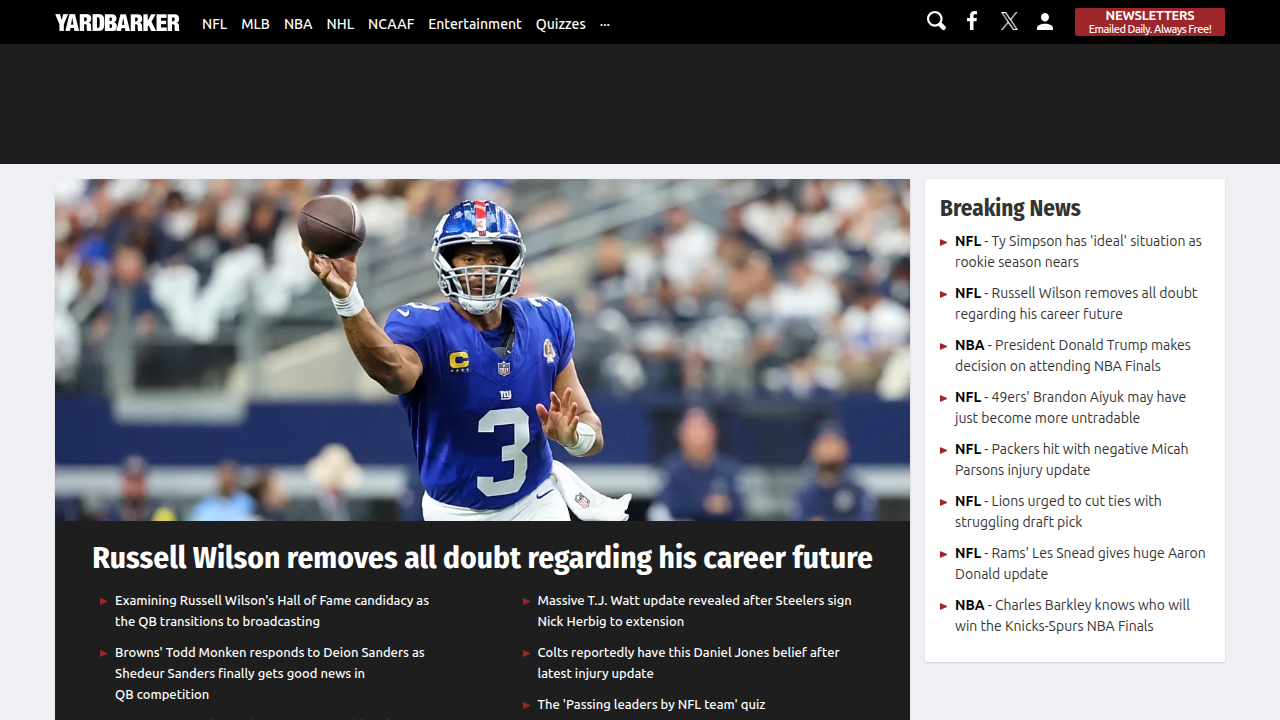
You can see a full list of comedians who crushed it in dramatic roles on Yardbarker from earlier this year. Carell is just one of many.
This article takes a close look at comedic actors and their unconventional filmography. We will explore the strange, bold, and sometimes baffling choices made by stars like Macaulay Culkin (his movie list after Home Alone is a wild ride), the surprising dramatic turns from rom-com queen Meg Ryan, and even the offbeat roles of dramatic actors like Glenn Close who have dabbled in absurd comedy. What we’re really after is the absurdity in pop culture and comedic film performances that makes these actors so fascinating to watch.
To understand how this kind of surreal comedy works, check out this comparison of Jack Black and Will Smith’s comedy styles. It shows how different approaches to humor set these actors apart.
If you love discovering the strange and surprising side of comedy, you’ll love exploring more. Love Absurd Humor? Meet the sci-fi series built around strange logic and smarter laughs.
The Dramatic Turn: When Comedy Icons Go Serious
Actually, the path Steve Carell took into serious drama was already worn smooth by a few pioneers. Some of the biggest names in comedy have given us performances that stick with you long after the credits roll. These moments define the power of comedic actors and their unconventional filmography.
Take Robin Williams. We knew him as the genie, Mrs. Doubtfire, and a manic stand-up force. Then came Good Will Hunting. He played Sean Maguire, a grieving therapist. It was quiet, raw, and completely heartbreaking. He won an Oscar for it. You can explore many examples of comedians who have successfully made this leap on this IMDb list, which tracks this exact pattern across decades.
Jim Carrey did the same thing. One minute he was the living cartoon from Ace Ventura. The next, he was the deeply tragic Joel in Eternal Sunshine of the Spotless Mind. He also gave us a chilling performance in The Truman Show, a role that feels more relevant in 2026 than ever. What made these roles so powerful was the vulnerability underneath. He was not hiding behind a funny voice. He was just present.
Then there is Adam Sandler. For years, people wrote him off as just silly. But Punch-Drunk Love and Uncut Gems changed everything. In Uncut Gems, Sandler plays Howard Ratner, a jeweler drowning in bad decisions. The movie is pure stress and anxiety, and Sandler carries every second of it. It is easily one of the best dramatic performances of the last ten years.
Why are comedians so good at this? One reason is timing. Great comics have perfect timing. Great dramatic actors need that same skill.
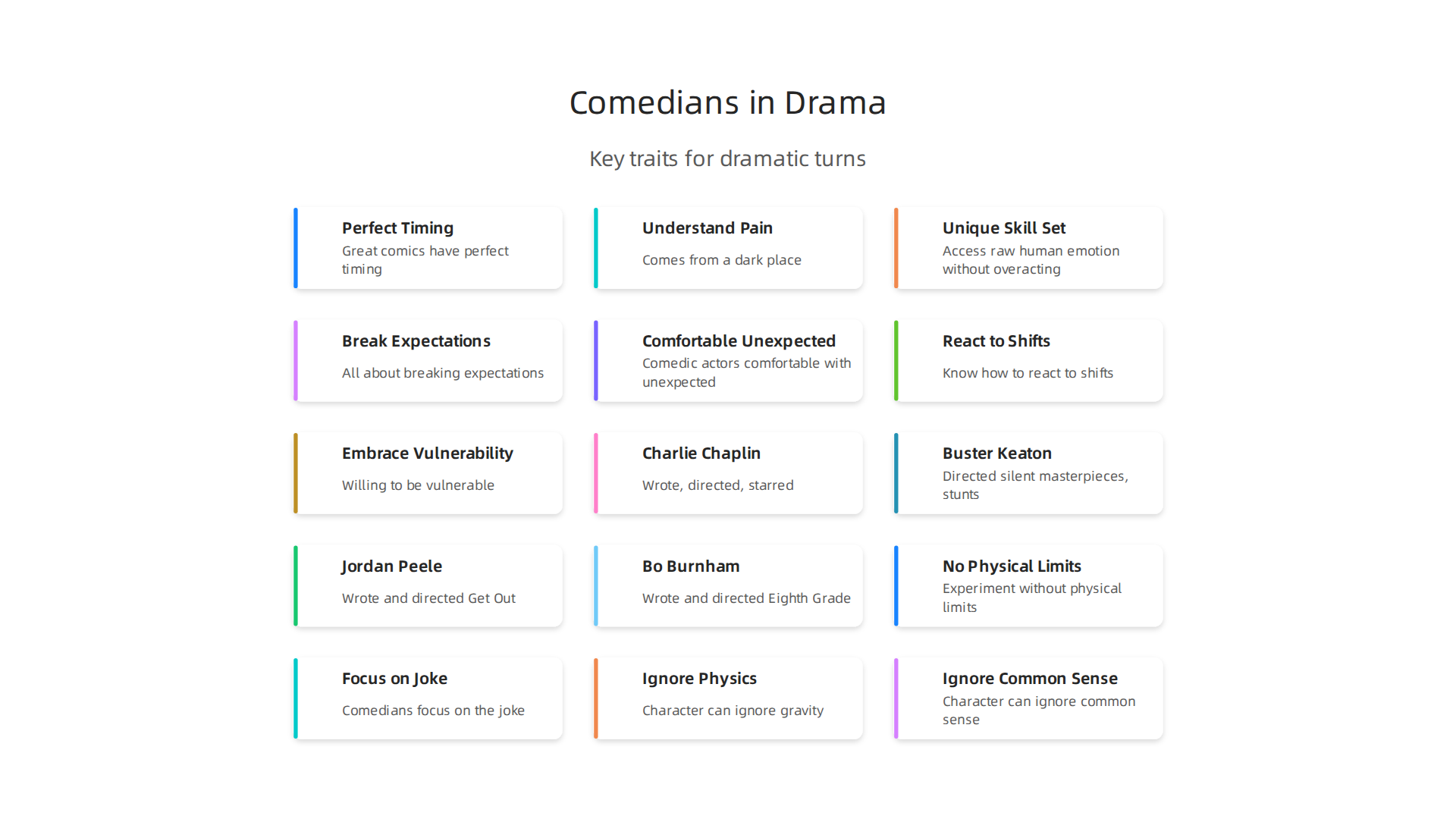
Another reason is an understanding of pain. Comedy often comes from a dark place. As this video essay explains, comedians have a unique skill set that lets them access raw human emotion without overacting. Sometimes the "usual" dramatic actors are just a little too stable to be truly believable in broken roles.
This pattern is a huge part of what we call absurdity in pop culture and comedic film performances. The very thing that makes someone a great clown (a willingness to be silly, to fall down, to feel deeply) is the same thing that makes them a great dramatic actor. It is all about breaking expectations.
For a closer look at another actor who mixes goofy charm with surprising depth, check out our analysis of Hugh Grant’s comic genius and dark comedy evolution. It shows how even the most established funny actors keep finding new and unexpected layers in their work.
If you love exploring these kinds of strange and unexpected shifts in comedy and performance, there is much more to discover.
Love Absurd Humor? Meet the sci-fi series built around strange logic and smarter laughs.
Surrealist Collaborations: Directors Who Pushed Comedians into the Abstract
But this move into drama is not the only strange path for comedians. Some directors have pushed funny actors into worlds where logic itself breaks down. These surrealist collaborations take everything a comedian knows about performance and turn it upside down.

The tradition goes back further than you might think. Luis Buñuel, the Spanish filmmaker who helped invent surrealist cinema, spent his whole career bending reality on screen. He worked with the painter Salvador Dalí on early films like Un Chien Andalou, and later made movies where polite dinner parties exploded into chaos for no reason. Buñuel challenged social norms by making them look completely ridiculous. As one analysis explains, he spent five decades challenging social and religious norms through surrealist film. For a deeper look at his influence, check out this profile of Buñuel as the father of cinematic surrealism.
Fast forward to the 1990s and 2000s. Directors like Charlie Kaufman, Spike Jonze, and David Lynch took this tradition and ran with it. They made films where reality feels slippery. Characters swap bodies, actors play themselves, and the whole world seems to run on strange rules.
Consider Being John Malkovich. Spike Jonze directed it, and Charlie Kaufman wrote it. The premise? A puppeteer finds a portal that lets you live inside actor John Malkovich’s head for fifteen minutes. To make this work, they needed actors who could handle complete absurdity without winking at the camera. The cast included comedians and dramatic actors alike, and the movie became a landmark in absurdity in pop culture and comedic film performances.
Then there is Adaptation. Kaufman wrote himself into the script. Nicolas Cage plays both Kaufman and his fictional twin brother. It is meta, weird, and somehow deeply human.
David Lynch took a different approach. With Eraserhead and later Twin Peaks: The Return, he cast actors known for comedy work in increasingly strange roles. The bumbling sheriff in Twin Peaks becomes a vessel for cosmic horror. The friendly waitress turns into a ghost. Lynch understood that comedy faces are perfect for surreal terror.
What makes these collaborations work so well? Comedic actors are already comfortable with the unexpected. They know how to react when reality shifts.

A straight dramatic actor might try to make sense of a surreal scene. A comedian just goes with it. That willingness to be confused, surprised, and vulnerable is exactly what surrealist cinema needs.
A more recent example is The One I Love, a 2014 film that keeps its surrealism domestic and secret. It stars Mark Duplass and Elisabeth Moss as a couple who discover a strange vacation house where their doppelgangers live. The movie demands actors who can play subtle differences between "real" and "copy." It is a masterclass in using comedic timing for psychological tension.
These directors prove something important. When you place a comedic actor into an unconventional story, you get something neither pure comedy nor pure drama can achieve. You get the strange, beautiful middle ground where absurdity in pop culture and comedic film performances live together.
If you love exploring these strange worlds where logic breaks and the universe gets weird, there is a book that captures that same energy.
Read a comedy where logic breaks and the universe gets weird.
The Auteur Comedian: Actors Who Wrote and Directed Their Own Oddities
Some funny people get tired of waiting for the perfect weird script to land in their lap. So they write it themselves. They direct it themselves. They build the whole strange world with their own hands.
This is the auteur comedian. A performer who steps behind the camera and into the writer’s chair to create something truly personal.
And when they do, the results often push comedic actors and their unconventional filmography into entirely new territory.
The Silent Pioneers
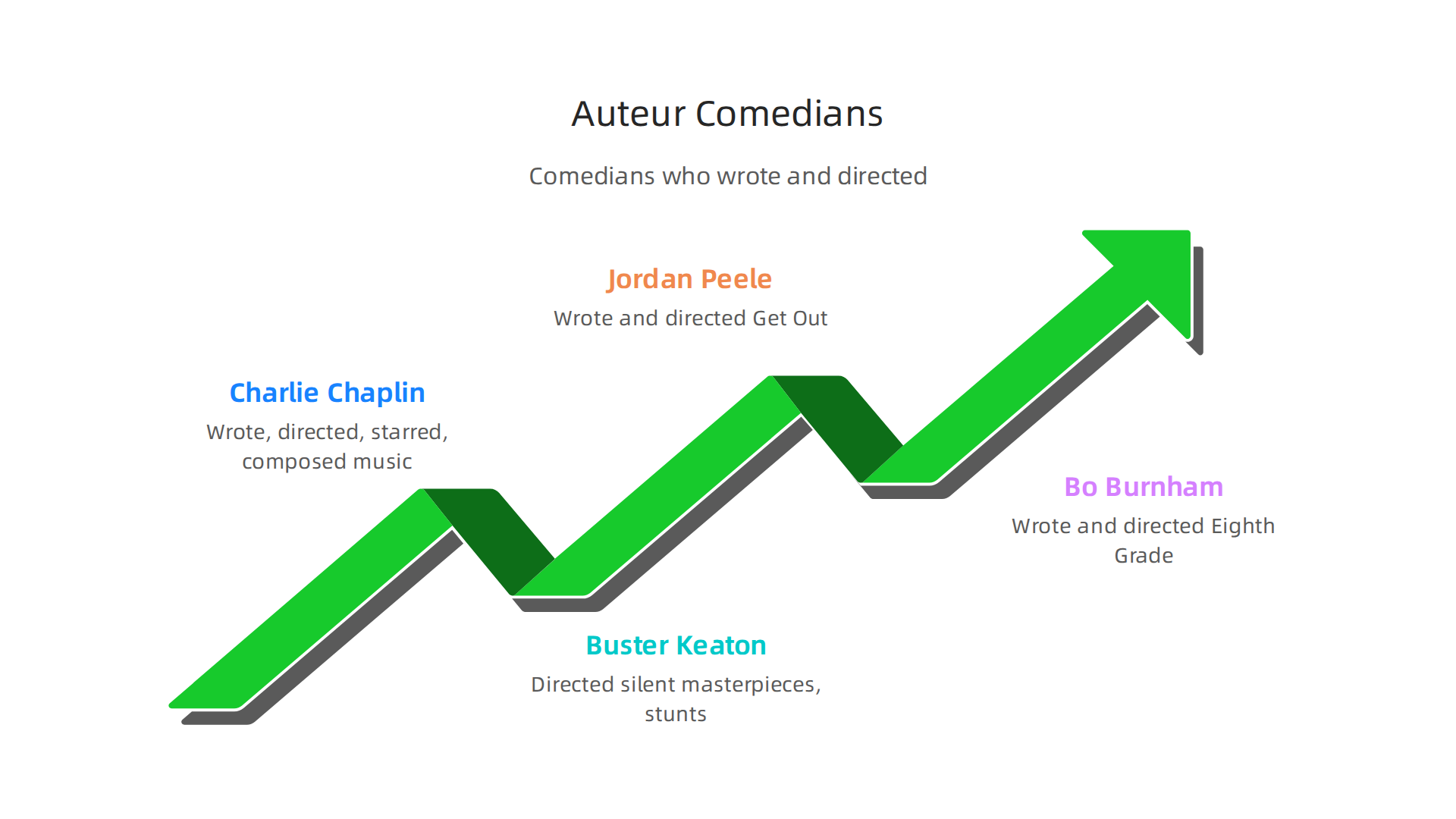
The tradition starts with the physical comedy greats. Charlie Chaplin wrote, directed, starred in, and even composed the music for films like City Lights and Modern Times. He controlled every frame. Buster Keaton was the same way. He directed his own silent masterpieces such as The General, where he performed death-defying stunts while building elaborate comic set pieces.
These men were not just performers. They were architects of absurdity. They understood that to make the audience laugh at a man standing under a falling building, you needed total control over the timing, the camera, and the tone.
The Modern Auteurs
Fast forward to the 2000s and 2010s. A new wave of comedians took control of their own careers.
Jordan Peele is the most famous example. After years on Key & Peele, he wrote and directed Get Out in 2017. That movie changed the game. It used horror to explore racism, and it became a massive critical and commercial success. In fact, the directorial debut by a comedian that launched a whole new genre was so well received that Peele followed it with Us and Nope. Each film is deeply strange, deeply personal, and impossible to categorize.
Then there is Bo Burnham. He started as a YouTube comedian. Then he wrote and directed Eighth Grade, a painfully honest coming-of-age film. Then he made Inside, a Netflix special he filmed alone in a room during the pandemic. Burnham controls everything: the songs, the lighting, the edits. The result is a raw, surreal, deeply funny portrait of anxiety and modern life.
Jim Carrey also tried his hand at directing with The Cable Guy? Actually that was directed by Ben Stiller. But Carrey did push for darker material. And the film became a box office hit, earning $149.3 million against its $51 million budget. It showed that comedic actors could stretch into unsettling roles when they had a director who understood their range.
Why This Matters
What do all these auteurs have in common? They refuse to stay in one lane. They blend comedy with horror, drama, music, and social commentary. They make films that feel like nobody else could have made them.
For audiences, this is a gift. It means we get strange, unforgettable movies that expand what comedy can do. If you love stories where the rules bend and reality gets weird, exploring absurdity in pop culture and comedic film performances is a joy that never stops giving.
You can find even more of this creative chaos in the films of other actor-writer-directors. Check out our look at absurdist comedy movies that defy logic from Chaplin to Rick and Morty for a longer list of unconventional works.
And if you want to read a story that captures that same wild creative energy, one that breaks every storytelling rule and makes you laugh while doing it, then you are ready for the next step.
Nonsense and Absurdism on Screen: From Monty Python to Tim and Eric
So far we have looked at solo comedians who took total control of their movies. But sometimes the strangest, most unforgettable comedy comes from a group of weird minds working together. When a troupe or collective forms around a shared sense of humor, they can create whole worlds of nonsense that no single person could build alone.
This is where absurdity in pop culture and comedic film performances really starts to shine.
The Python Effect
The most famous example is Monty Python. A group of six British comedians came together in the late 1960s and changed comedy forever.

Their TV show Monty Python’s Flying Circus was built on surreal sketches that made no logical sense and yet felt strangely perfect.
Then they took that magic to the big screen. Monty Python and the Holy Grail (1975) is still one of the best absurdist comedies ever made. Knights who say "Ni," killer rabbits, and coconut clops all live in a world that proudly rejects reason. Life of Brian (1979) followed and pushed religious satire into equally ridiculous territory.
Where did this style come from? It grew out of Dadaism in the 1920s and moved through the surreal worlds of The Goon Show in the 1950s before reaching Python. Surreal humour is a form of comedy that deliberately breaks cause and effect. That is the engine behind Python’s best bits.
The Modern Absurdists
Today, new groups carry that same torch. Tim & Eric created Tim and Eric Awesome Show, Great Job! Their humor is intentionally cheap, awkward, and jarring. They use bad green screen, weird sound effects, and painful pauses. It feels like a fever dream. And it is hilarious if you let yourself go with it.
The Lonely Island (Andy Samberg, Akiva Schaffer, Jorma Taccone) brought absurdist music videos to Saturday Night Live and beyond. Songs like "Jizz in My Pants" and "I’m on a Boat" take simple ideas and stretch them into ridiculous places. Their movie Popstar: Never Stop Never Stopping is a brilliant parody of music documentaries that only a tight-knit comedy group could pull off.
These groups understand something important. Nonsense is not random. It works when the performers commit completely to the joke, no matter how strange it gets.
Why Troupes Matter
When you watch a Python sketch or a Tim & Eric bit, you feel the energy of a team that trusts each other. They are willing to look foolish together. That trust produces comedy that feels alive and unpredictable.
If you enjoy finding absurdity in pop culture and comedic film performances, following the work of comedy collectives is a goldmine. Each group has its own weird fingerprint. And the tradition keeps growing.
Want to see how modern comedians keep that spirit alive? Check out our list of top 10 absurdist comedians who mastered surreal humor on screen. Or dive deeper into the evolution of nonsense with our guide to absurdist comedy movies that defy logic from Chaplin to Rick and Morty.
And if you want a story that feels like it was written by a very strange collective of comedians, one that bends reality and makes you laugh at the absurdity of it all, we have something for you.
Love Absurd Humor? Meet the sci-fi series built around strange logic and smarter laughs.
Science Fiction and Fantasy: Comedians in Unfamiliar Worlds
Have you ever wondered what happens when a comedian steps into a world of aliens, ghosts, or medieval fantasy? The answer is pure gold.

Some of the best surreal comedy comes from funny actors who take their weird energy into sci-fi and fantasy settings. These comedic actors and their unconventional filmography show us how humor can feel right at home in the strangest places.
The Ghostbusters Formula
Bill Murray is the perfect example. In Ghostbusters (1984), he plays a sarcastic parapsychologist who treats ghost hunting like a joke. The movie blends supernatural scares with sharp one liners. Murray’s deadpan delivery makes every line land harder. He is not just acting funny. He is using the absurdity of the situation to explore bigger ideas about life and death. That is the secret of absurdity in pop culture and comedic film performances.
Dan Aykroyd took the same approach in The Coneheads (1993). As an alien family trying to blend into suburban America, the comedy comes from how seriously the characters take their ridiculous situation. The movie leans into the strangeness of everyday life seen through alien eyes. It is silly, yes. But it also makes you think about belonging and identity.
The Jack Black Wild Card
Jack Black brings his own brand of chaos to fantasy worlds. In Tenacious D: The Pick of Destiny (2006), he plays a deluded musician on a quest for a magic guitar pick. The movie is part rock opera, part fantasy adventure, and all ridiculous. Black commits completely to the absurd premise. His energy turns a simple joke into an epic journey.
These roles allow comedians to explore existential themes while keeping their comedic roots. For more on how Jack Black uses this approach, check out our look at Jack Black and Will Smith comedy styles and how absurdist humor sets them apart.
The Surrealist Connection
This style of comedy has deep roots. It connects back to the surrealist films of Luis Buñuel, who challenged social norms by mixing the real with the impossible. Buñuel was a master of surreal cinema, using strange images to question everything we take for granted, as explained in this analysis of his career. Comedians like Murray, Aykroyd, and Black carry that same spirit into mainstream movies.
When a funny actor steps into a sci-fi or fantasy world, the audience gets to laugh at the unfamiliar. That laughter opens the door to deeper questions. Why are we here? What is real? Why is a man fighting a demon with a guitar? The best comedic actors and their unconventional filmography answer those questions with a smile.
If you want to see how today’s comedians keep pushing the boundaries of absurdity in strange worlds, you will love this next book. It takes everything we have talked about and turns it into a story that bends reality and makes you laugh at the absurdity of it all.
The Animated Voice: Comedians Lending Their Weirdness to Cartoons
Now we step into a world where comedians can be even more bizarre. Animation removes the limits of the human body. A voice actor does not need to look silly or move in a funny way. They just need to sound right. That freedom lets comedic actors and their unconventional filmography reach new levels of strangeness.
Voice acting is a pure playground for absurdity in pop culture and comedic film performances. Without a physical face to stay serious, a comedian can scream, whisper, or change pitch in ways that make no sense in real life. And that is exactly what makes it so funny.
The Masters of Animated Absurdity
Think of John DiMaggio. He is the voice of Bender in Futurama. Bender is a robot who drinks, steals, and hates everyone. DiMaggio gives him a rough, loud voice that sounds like he is always angry about something silly. The comedy comes from how seriously Bender takes his ridiculous robot life. That is pure absurdist humor at work. Surreal humour, as described by Wikipedia, works by breaking the normal rules of cause and effect.

Bender’s behavior does that perfectly.
Dan Castellaneta is another legend. He has voiced Homer Simpson for over three decades. Homer is a bumbling father who should not survive his own stupidity. But he does. Castellaneta makes every line sound like Homer just discovered something both amazing and stupid at the same time. The absurdity of a man who chokes his son, works at a nuclear plant, and still loves his family feels real because of the voice.
Then there is Eric André. He is known for his wild live action show, but his voice work in animation takes his weirdness even further. André has voiced characters in shows like Bob’s Burgers and The Simpsons. He brings the same chaotic energy but without needing to destroy a set. The result is pure surreal comedy. For more on comedians who push absurdist boundaries across different media, check out our list of top 10 absurdist comedians and see how many voices you recognize.
Why Animation and Absurdism Are a Perfect Match
Animation allows comedians to experiment without physical limits. A character can change size, float in the air, or speak in nonsense.
The audience accepts it because the world is already fake. That freedom lets comedians focus on the joke, not the performance.
The history of absurdist comedy connects to animation too. The early surrealist movement influenced cartoons like Looney Tunes and The Goon Show on radio. According to Psyche, absurdist comedy comes from a tradition of breaking logic and expectation. Animation makes that easy. A cartoon character can ignore gravity, physics, and common sense, just like the comedians who voice them.
Some of the best cult classic films and shows come from this mix. The Simpsons, Futurama, Rick and Morty, and Adventure Time all rely on voice actors who are not afraid to be weird. These comedic actors and their unconventional filmography prove that the strangest voices often make the biggest impact.
If you enjoy how these animated worlds bend logic and make you laugh at the impossible, you will love a story that does the same thing. It is a sci-fi series built around strange logic and smarter laughs. Meet it here:
Love Absurd Humor? Meet the sci-fi series built around strange logic and smarter laughs.
Experimental and Avant-Garde Comedy Films
Some comedians take their weirdness to a whole new level. They leave behind mainstream audiences and step into projects that make no sense to most people. These are experimental and avant-garde comedy films. They are strange, bold, and often hard to explain. But for fans of absurdity, they are pure gold.
A small group of comedic actors and their unconventional filmography define this space. They are not afraid to look ridiculous or confuse the audience. They care more about the art than the box office.
The Actors Who Dare to Be Weird
Take John Malkovich in Being John Malkovich. The whole movie is built on a weird idea. A puppeteer finds a portal that lets people enter the mind of actor John Malkovich. And Malkovich himself plays a version of himself. The comedy comes from watching a serious actor deal with complete nonsense. It is a perfect example of absurdity in pop culture and comedic film performances.
Jim Carrey took a similar risk with The Cable Guy. This was not his standard funny face movie. It was darker, stranger, and full of uncomfortable laughs. According to IMDb news, Carrey did all his own stunts, and the film became a box office hit despite mixed reviews. That commitment to the weird character made it a cult favorite.
Simon Pegg has also explored niche projects. Beyond his mainstream hits like Shaun of the Dead, he has worked on smaller films that bend genres in strange ways. These projects often premiere at festivals and attract a dedicated fanbase. If you want to see more actors who push boundaries, check out our list of absurdist comedy movies that defy logic.
Why These Films Matter
Experimental comedy films break the rules of commercial filmmaking. They are not designed to please everyone. Instead, they challenge the audience to think and laugh at the same time. These films find their home at film festivals like Sundance or Cannes. Critics love them, even if the general public stays confused.
Some comedians have even made directorial debuts that push boundaries. Jordan Peele’s Get Out started as a comedy but became a horror masterpiece. According to Paste Magazine, Peele’s debut showed how comedians can bring fresh eyes to any genre.
The beauty of these films is that they take risks. They might fail, but when they succeed, they create something no one has seen before.
If you love this kind of brave storytelling that blends logic with laughter, you will enjoy a book that does the same. Start the Absurd Adventure with a novel that turns cosmic confusion into sharp, funny fiction. It is perfect for anyone who appreciates the weird and the wonderful.
The Critical Reception: Why Critics Love and Audiences Hate These Films
Here is the strange truth about comedic actors and their unconventional filmography. Critics often praise these movies as bold and brilliant. But regular moviegoers? They walk out confused or bored.

This split happens more often than you think.
Why? Three big reasons.
First, narrative complexity. Movies like Synecdoche, New York are packed with strange timelines and dreamlike scenes. Critics love unpacking layers. But if you just want a simple laugh, this film feels like homework. According to an IMDb list of comedians in dramatic roles, many actors who start in comedy bring an unpredictability that critics adore but audiences find jarring.
Second, tonal shifts. Take The Cable Guy. Jim Carrey was famous for goofy faces, but this film turned dark fast. One moment he is funny, the next he is scary. That mix confuses people who expect a standard comedy. As one analysis explains, comedians going dramatic often create performances that are "uncomfortable" because they break the actor’s brand.
Third, departure from the actor’s brand. When you think of Meg Ryan or Glenn Close, you think of rom-coms or drama. But when they appear in absurdist projects, fans feel betrayed. The same goes for Macaulay Culkin, whose later roles are far from Home Alone. These shifts create absurdity in pop culture and comedic film performances that critics celebrate as risk-taking, while audiences miss the old comfort zone.
Inherent Vice is another perfect example. Paul Thomas Anderson made a movie that feels like a hazy dream. Critics called it genius. Audiences complained that nothing made sense. The movie demands patience, which many viewers lack.
If you are the kind of person who loves these weird, uneven films, you are not alone. Plenty of comedic actors and their unconventional filmography prove that risk pays off for those who stick around. Want to dive deeper into the world of strange logic and smarter laughs? Check out our list of top 10 absurdist comedians who mastered surreal humor on screen for more acts that break the rules.
And if you are ready for a story that turns confusion into comedy, Love Absurd Humor? Meet the sci-fi series built around strange logic and smarter laughs. It is perfect for anyone who appreciates the weird gap between critics and audiences.
Summary
This article delves into the fascinating phenomenon of comedic actors who transcend their funny personas by embracing unconventional roles, exploring the depths of their artistic ambition. It examines how stars like Steve Carell, Robin Williams, and Jim Carrey master dramatic performances, leveraging their inherent timing and understanding of human emotion. The piece also uncovers how visionary directors push comedians into surrealist collaborations, how actor-auteurs craft their own unique cinematic oddities, and how comedy troupes build entire worlds of nonsense. Furthermore, it highlights the impact of comedians in sci-fi, fantasy, and animated voice roles, showcasing the diverse ways absurdity shapes pop culture. Ultimately, readers will gain a deeper appreciation for the versatility of these performers and the compelling reasons why their boundary-breaking filmographies often delight critics while sometimes challenging audiences.