
Introduction: The Unseen Architect of Absurdist Laughter
If someone asked you to name Mary Elizabeth Winstead’s best known role, you would probably say a horror movie. And that makes sense. She became famous after starring in Final Destination 3 (2006) and The Ring Two, and later showed off her action chops as the Huntress in Birds of Prey (2020). But here is the thing. If you only think of her as a scream queen or an action hero, you are missing out on something really special.
Winstead has quietly become one of the most skilled comedic performers working today. Her deadpan timing, her willingness to look completely ridiculous, and her ability to play totally straight against absurd situations make her a secret weapon in comedy.

Think about Ramona Flowers in Scott Pilgrim vs. the World. On paper, that character is the cool, mysterious love interest. But Winstead layers her with tiny, perfect comedic beats that sell the movie’s wild video game logic.
So why do so many people overlook this side of her? Probably because her horror and action work is so loud and memorable. The quiet, weird comedy is harder to spot. But once you start looking, you see it everywhere. In Smashed (2012), where she plays an alcoholic teacher, she finds dark, human humor in a serious story. In All About Nina (2018), she learned real stand up comedy by bombing on stage in front of stone faced extras, according to interviews.
This article will break down what makes Mary Elizabeth Winstead movies so special from a comedy standpoint. We will look at her techniques, her best performances, and how she builds absurdist humor into even the most intense genres.
If you love discovering how smart, funny performers work, you might also enjoy our breakdown of movies with Tessa Thompson where absurdist humor feels strangely real. Both actresses share a special gift for making the strange feel completely natural.
Early Breakthroughs: Forging a Comedic Identity
You might not think of a Disney superhero movie or a teen horror flick as the perfect training ground for comedy. But that is exactly where Mary Elizabeth Winstead started sharpening her tools.

In Sky High (2005), she played the popular cheerleader with a secret identity. On the surface it is a standard role. Watch closely though, and you see her trading on a kind of deadpan boredom that makes the superhero world feel even sillier. Then came Final Destination 3 (2006), a movie where everyone is supposed to be terrified. Instead, Winstead plays her scenes with a knowing, almost darkly amused look. The horror works, but her comedic timing makes the absurd premise land even harder. As her filmography on Wikipedia shows, she jumped between genres with a consistency that hinted at something special.
What is interesting is how she carried that same knack into independent comedies. Movies like The Hollars asked her to balance a messy family drama with quiet, real humor. She does not mug for the camera. Instead, she lets the awkward pauses and tiny facial reactions do the work. This is where her dry delivery really started to stand out to critics. Audiences began to see that she could ground even the strangest situation with a simple, straight-faced glance.
If you enjoy watching actors make the weird feel normal, you might like our breakdown of absurdist comedy movies that defy logic from Chaplin to Rick and Morty. It explores how performers like Winstead use understatement to sell surreal moments.
Her early roles in Sky High and Final Destination 3 were just the beginning. They gave her a foundation. But the real payoff came when she started mixing that comedic touch into dramas and action flicks. That is where her identity as a secret comedy weapon really took shape.
Scott Pilgrim vs. the World: A Comedic Turning Point
If there is one movie in the list of Mary Elizabeth Winstead movies that changed everything, it is Scott Pilgrim vs. the World (2010). In this film, she plays Ramona Flowers, the mysterious girl with the ever-changing hair colors and a past full of evil exes. On paper, it is a small role in a video game inspired movie. But Winstead turned it into a masterclass in deadpan comedy.
Here is the thing about Ramona. She is cool, distant, and rarely shows her full hand. Winstead plays her with a kind of quiet boredom that makes all the crazy stuff around her feel even funnier. When Scott fights a bass-playing hipster or a vegan with psychic powers, she just stands there with a slightly amused look. That is the joke. Her straight face grounds the movie. Without her serious delivery, the absurd fights might feel too silly.
Critics noticed this balance right away. Many reviews praised how she made the surreal story feel real. The film has since become a cult classic. Fans still talk about her scenes and her perfect timing. If you look at her filmography on Rotten Tomatoes, you will see this role is often listed as a key moment in her career.
For anyone who loves this kind of surreal comedy, the movie is a goldmine. It mixes video game logic with real human feelings. If you want to see more films that play with reality like this, check out our list of absurdist comedy movies that defy logic from Chaplin to Rick and Morty. It is full of examples that use the same tricks Winstead mastered in Scott Pilgrim.
The Art of Deadpan: Timing and Delivery
You might think deadpan is just about saying boring things with a straight face. But watch Mary Elizabeth Winstead closely and you will see something deeper. Her comedy lives in the tiny pause before a line, the nearly invisible eyebrow raise, the moment where she lets silence do the work.
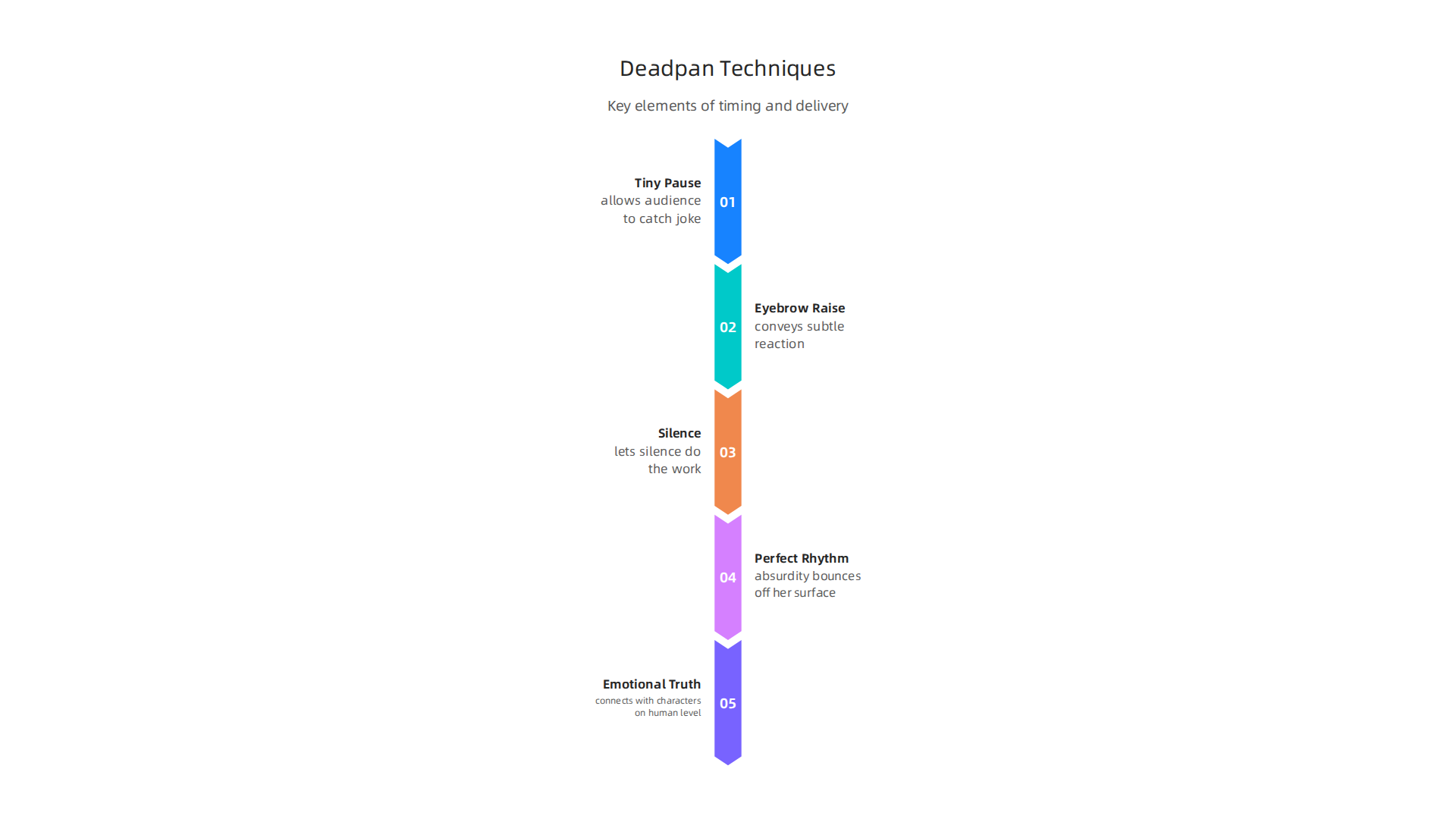
Think about Ramona Flowers again. When Scott says something ridiculous, she does not react right away. She waits. That small beat lets the audience catch the joke first. Then she gives a look that says, "Really?" It is a perfect rhythm. The absurdity bounces off her cool surface and lands harder on us.
Winstead shares this skill with other deadpan greats like Aubrey Plaza or Bill Murray. But her style is quieter. She does not need to be sarcastic or mean. She just lets the world around her be strange while she stays still. In her best performances, critics frequently highlight this control. The Collider review of her career notes she is "usually singled out as a highlight" in reviews, and her comic timing is a big reason why.
What makes her deadpan feel so real? She finds the emotional truth first. In a Backstage interview, she talks about connecting with characters on a human level. That honesty is what stops her deadpan from feeling like a performance. It feels like a real person reacting to a weird world.
If you love studying how actors use silence and timing for laughs, you will enjoy seeing this technique in other performers too. Check out our breakdown of Keanu Reeves’ deadpan comedy genius for another look at how stillness can be hilarious.
Physical Comedy and Expressive Range
But deadpan is only one part of the puzzle. Winstead also uses her whole body to make us laugh. She does not just say the joke flatly. She falls, fights, and dances her way into comic moments that stick with you.
Think about the fight scenes in Scott Pilgrim vs. the World. Ramona does not just punch. She moves like a dancer. Every hit has a rhythm that looks silly and serious at the same time. When she gets knocked down, the way she lands is pure physical comedy. It is exaggerated but never stupid. That blend of hard action and playful slapstick is rare.
Now look at Birds of Prey. Winstead plays Huntress, a character who is awkward and deadly all at once. Her body language carries the joke. She stands stiff. She throws weapons with strange precision. The comedy comes from how uncomfortable she looks in her own skin. Critics have pointed out that her physicality is a big reason why she is "usually singled out as a highlight" in reviews of her movies. The Collider analysis of her career confirms that her range keeps her performances fresh.
What makes this work? Winstead finds the emotional truth in every move. In her Backstage interview, she talks about connecting with her characters on a human level. That honesty stops the physical gags from feeling forced. She is not just being funny for fun. She is letting the character’s awkwardness or power show through movement.
If you enjoy seeing how actors use physicality in strange roles, you might like our look at movies with Tessa Thompson where absurd humor feels weirdly real.
Genre Alchemy: Horror, Comedy, and the Absurd
Winstead does not stick to one lane. She jumps between horror and comedy like it is nothing. That mix is a big reason why her mary elizabeth winstead movies feel fresh.

She brings humor into scary scenes and tension into funny ones.
Look at Final Destination 3. She plays Wendy, a serious girl stuck in a nightmare. The horror is real, but Winstead adds a layer of dry panic that makes you almost laugh. She is the straight woman surrounded by chaos. That contrast creates comedic friction. According to ScreenRant’s ranking of her horror roles, her work in this movie shows a “knack for making the absurd feel grounded.”
Then there is The Thing (2011). She is the tough scientist who keeps a straight face while everything falls apart. The horror comes from the body horror, but the comedy sneaks in from her deadpan reactions. MovieWeb notes that she “brings a human touch to even the most outlandish plots.”
This genre alchemy is central to absurdist humor. When you take a terrifying moment and add a flat reaction, you get something strange and funny. If you want to see more actors who mix horror and comedy, check out our piece on absurdist comedy movies that defy logic. It shows how the same trick works across different eras.
Action Comedy: Balancing Stunts and Laughs
Mary Elizabeth Winstead also nails action comedy. In Birds of Prey, she plays Huntress. Huntress is a brutal fighter who has zero social skills. That combination is gold for absurdist humor. She delivers deadpan lines right after slicing someone with a crossbow bolt. The violence is real, but her awkward delivery makes you snort.
Her physical training makes this work. Winstead does a lot of her own stunts. She has to stay in shape and learn fight choreography. That control lets her add tiny comic beats inside action scenes. A punch, a pause, a confused blink. According to Collider’s ranking of her roles, her work in Birds of Prey shows a "perfect balance of intensity and levity." You buy the threat, but you also laugh at the character.
This synergy between stunt coordination and comedic timing is rare. Few actors pull it off. Keanu Reeves uses a similar deadpan approach in his action comedies. If you want to see how stoic characters create big laughs, check out our breakdown of Keanu Reeves absurdist humor and the secret behind his deadpan comedy genius.
Winstead proves that action comedy is not just about funny one-liners. It is about physical comedy that comes from real training. That is what makes her mary elizabeth winstead movies feel fresh and unpredictable.
Ensemble Chemistry: Elevating Co-Stars
So what makes mary elizabeth winstead movies work so well with big casts? It is her ability to adapt. She changes her comedic style to fit whoever she is working with.
Think about the nervous awkwardness of Michael Cera in Scott Pilgrim vs. the World. Winstead plays confident and direct. That contrast creates the funny tension. Now think about John Travolta in Bobby. The energy is totally different. She finds a way to match the room. More recently, she played opposite Margaret Qualley in some dynamic scenes. Winstead does not have a default setting. She tailors her performance to the scene.
In an ensemble, someone has to be the anchor. If everyone acts crazy, the audience gets lost. Winstead often gives us a stable person to hold onto. She stays grounded. This lets the absurd characters around her shine brighter.
We see this in Fargo season 5. She brings a calm, professional energy into totally chaotic situations. The dark humor works because she plays it real. According to the The Thing Wikipedia entry, she led a large ensemble cast as the logical scientist trying to survive. She explained in an interview with ScreenAnarchy for Smashed that she loves finding the truth in a character, even when things get strange.
Her improvisational skills also help her react in the moment. Improv is all about listening. And Winstead is a great listener. This skill makes her an excellent ensemble player. She can throw a joke, but she can also catch one.
If you enjoy actors who can balance deep emotions with weird comedy, you might like our breakdown of movies with Tessa Thompson where absurdist humor feels strangely real. Both actresses know how to elevate their co-stars naturally.
Improvisation and Rewriting: Shaping the Script
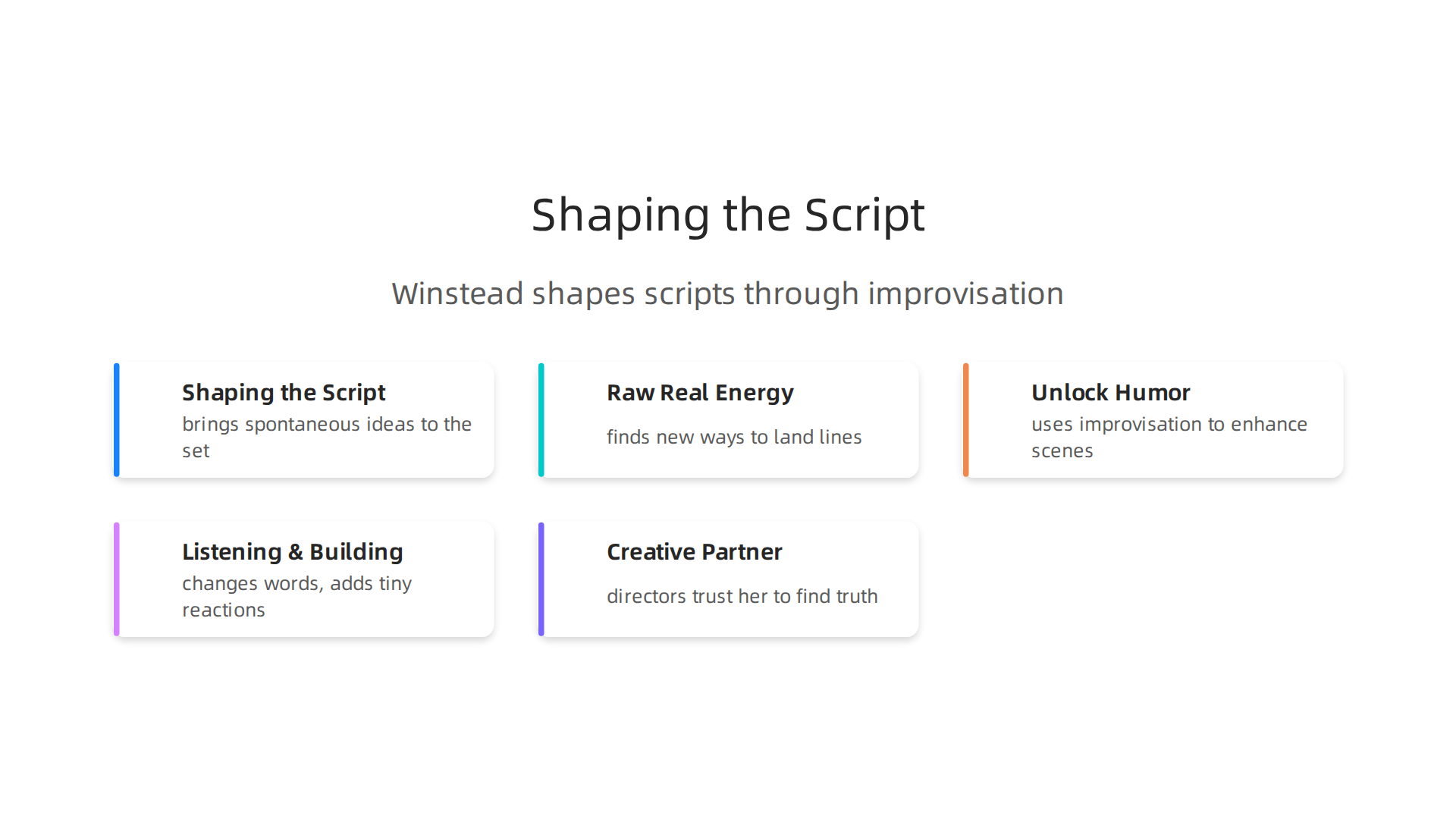
When you watch mary elizabeth winstead movies, you see a polished performance. But many of the funniest and most honest moments did not come straight from the page. Winstead has a habit of shaping the script as she works. She brings spontaneous ideas to the set.
And directors love it.
Take Smashed, for example. Director James Ponsoldt worked closely with Winstead on that film. In an interview, he called it a tender and touching story about addiction. Winstead helped bring raw, real energy to those scenes. She did not just say the lines. She found new ways to make them land. ScreenAnarchy interviewed Ponsoldt about the film, and his respect for her collaborative spirit is clear.
Winstead also knows how to use improvisation to unlock humor. The idea that improv is democratic fits her style perfectly. As described in Improv Nation, improvisation asks everyone to listen and build together. That is exactly what Winstead does. She might change one word in a line or add a tiny physical reaction. These small choices add layers of comedy that the writer never planned.
In the 2011 film The Thing, she played a scientist in a big ensemble cast. The Wikipedia entry for the film notes that the story depends on logic and tension. Winstead used her instincts to keep the character grounded while letting the absurd horror play out. That balance is hard to pull off.
Her ability to rewrite in the moment makes her more than an actress. She becomes a creative partner. Directors trust her to find the funny truth in any scene. That is why her characters feel so alive.
If you enjoy actors who shape their material through improvisation, check out our breakdown of absurdist comedy movies that defy logic to see how playfulness on set creates lasting humor.
Underrated Gem: ‘Fargo’ and Television Comedy
Have you ever watched a TV show that felt like a movie you could not look away from? That is exactly what Mary Elizabeth Winstead delivered in Fargo season 2. She played Nikki Swango, a character who lives right in the middle of dark, Coen brothers style absurdity.
Nikki is a smart, quiet woman who can be ruthless when she needs to be. But Winstead plays her with a dry sense of humor that makes every scene pop. She does not tell jokes. She just lets the situation get weirder, and her calm reaction becomes the punchline.
Critics noticed right away. The show earned six Emmy nominations, and Winstead’s performance was a big reason for that. Collider highlighted the season for its blend of black comedy and tension. That is a hard mix to pull off. But Winstead made it look easy.
Here is the thing. Nikki Swango is not a typical TV character. She is cunning. She is loyal. And she finds humor in the middle of chaos. That sounds a lot like the improv skills we talked about earlier. Winstead brought her instinct for rewriting and reacting into every scene.
This role also opened the door to a whole new audience. Fans of prestige TV comedy discovered her work. Suddenly, people who had never seen her earlier films started looking up her name. That is how a great performance builds a career.
For more on how actors use dark, weird humor to create unforgettable characters, check out our guide to absurdist comedy movies that defy logic. You will see the same playful instincts at work.
The Legacy in Progress: Future of Her Comedic Cinema
So what is next for Mary Elizabeth Winstead? Her upcoming projects show she is not slowing down. She will appear in The Last of Us season 2, a show that blends deep emotion with tense, dark moments. That is the perfect space for her kind of humor. She also signed on for Mercy, a thriller from a director known for twisting expectations. Both projects signal she will keep working in the space where comedy and drama meet.
Her influence is already spreading. Younger actors now point to her work in films like Smashed and All About Nina as inspiration.

In All About Nina, she played a stand-up comedian, and critics called it one of the most overlooked performances of 2018. A review from Solzy at the Movies highlighted how she brought real emotional weight to a comedic role. That mix of heart and humor is rare. And it is teaching a new generation how to do the same.
The streaming world also helps her style of absurdist humor reach more people. Platforms like Apple TV and Netflix give indie films and offbeat series a bigger audience. That means more room for strange, human stories that do not fit a standard mold. Her performance in the drama Smashed earned her an Independent Spirit Award nomination. It showed she could make serious topics feel real without losing her sharp comedic timing.
If you enjoy watching actors who bend genres, check out how Tessa Thompson uses absurdist humor to make strange situations feel real. Winstead and Thompson share that same instinct: they find the funny in the heavy moments. That is the kind of comedy that lasts.
Summary
This article argues that Mary Elizabeth Winstead is an underrated master of absurdist and deadpan comedy, not just a horror or action star. It traces how early roles in films like Sky High and Final Destination 3 laid a foundation for a uniquely quiet, reactive comic style that she honed in Scott Pilgrim vs. the World, Fargo, Smashed and Birds of Prey. The piece breaks down her core techniques—timing, small facial beats, controlled physicality, stunt work and on-set improvisation—and explains how she blends comedy into horror, action and ensemble pieces to make surreal moments feel grounded. You’ll learn to recognise the tiny pauses and body choices that sell her jokes, why directors trust her to shape scenes, and which performances best showcase her range. The article also situates her alongside other deadpan performers and points to where to stream or rewatch her most revealing roles.