

Introduction: The Enduring Appeal of Hugh Grant’s Comic Genius
When you think of Hugh Grant, what comes to mind? That flustered, stammering British gentleman who always seems a little out of sorts. That’s the surface. But his comedy runs much deeper. From Four Weddings and a Funeral to Paddington 2, his roles show a sharp understanding of timing, awkwardness, and even absurdist humor. In fact, according to Rotten Tomatoes’ ranking of Hugh Grant movies, Paddington 2 sits at number one. That’s not a fluke. It proves his comedic range goes beyond romantic leads.
Take Notting Hill. Julia Roberts once called it the "dumbest idea", but it grossed $364 million worldwide. Why? Because Grant’s understated, self-deprecating delivery made the ridiculous feel real. He mastered what we call absurdist humor in movies: blending everyday awkwardness with the surreal.
In this article, we will explore his full filmography, break down the techniques that make his comedic timing unforgettable, and show why his characters still resonate with audiences in 2026. Whether you love him in Bridget Jones’s Diary or Heretic, his gift for making us laugh while feeling deeply human is unmatched.
If you enjoy digging into the weird, wonderful side of comedy like this, check out a sci-fi series built around strange logic and smarter laughs. Love Absurd Humor?
The Bumbling Persona: Hugh Grant’s Signature Comic Archetype
You know the floppy hair. You know the stammering voice. But the real reason we love him is the "lovable bumbler" persona he perfected.
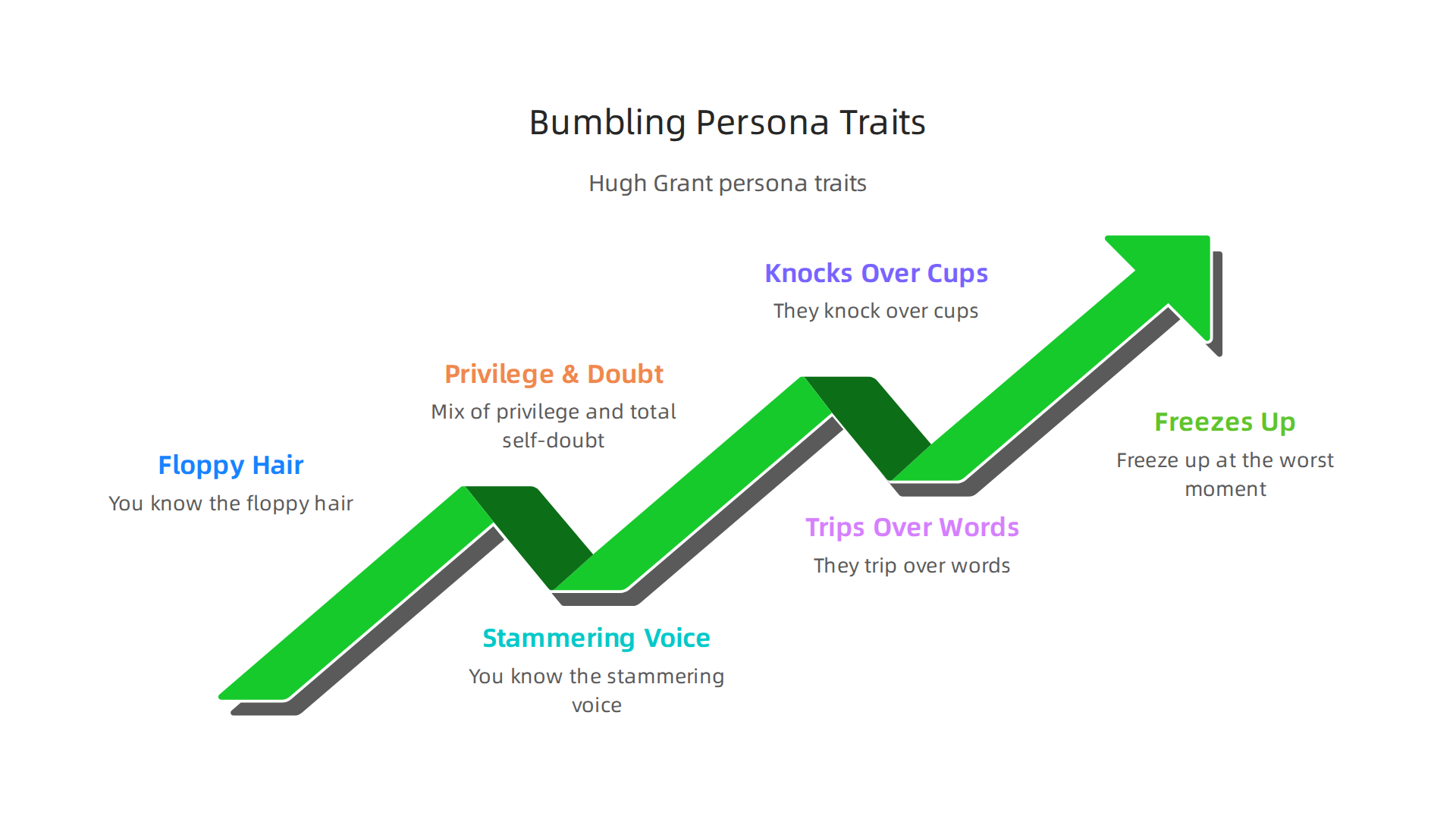
This is his trademark move.
His characters usually come from a place of comfort. They are well-educated British men with nice homes. Yet they never seem comfortable in their own skin. They trip over words. They knock over cups. They freeze up at the worst possible moment.

That mix of privilege and total self-doubt is pure gold. It makes him easy to root for. We see ourselves in his awkwardness. He feels real, even when the plot around him is totally ridiculous.
Think about William Thacker in Notting Hill. He is a quiet bookshop owner who stumbles into a relationship with a movie star. Julia Roberts actually called the premise the "dumbest idea". But Grant’s fumbling charm turned it into a $364 million hit. He made an impossible situation feel totally believable by acting completely lost.
This persona is not an accident. It comes straight out of British comedy traditions. Think of the well-meaning but clueless upper-class figures from classic British sitcoms. Grant took that awkward energy and polished it into something fresh. According to Ultimate Movie Rankings, this consistency is a big reason why so many of his films remain fan favorites.
Of course, the bumbling persona hits hardest when the world around the character is just a little off. That tension between a normal guy and a crazy situation is a core trick of absurdist comedy. If you love watching how awkward characters handle strange logic, check out how Chris Pine’s movies show the mechanics of absurdist comedy.
And if you are ready for a deep dive into a world built on weird rules and smarter laughs, you will love this one-of-a-kind sci-fi series. Love Absurd Humor?
From Rom-Com Royalty to Dark Comedy: The Evolution of His Roles
For a long time, we only saw Hugh Grant as the floppy-haired romantic lead. He made us laugh by fumbling through love stories. Think Notting Hill or Bridget Jones’s Diary. But over the last decade, something shifted. The man who owned romantic comedy started playing characters you would not trust.
It started slowly. Small roles in darker films. Then came the full turn. In 2019, Grant played a sleazy journalist in Guy Ritchie’s The Gentlemen. He chewed the scenery with a snarky grin. You barely recognized him. Then in 2024, he delivered a chilling performance in the horror film Heretic. Rotten Tomatoes ranks Heretic as the third best film in his entire career. That is a long way from a bookshop in Notting Hill.
So what changed? According to an interview with Daily Actor, Grant credits director Stephen Frears for helping him break free from the romantic lead typecasting. Audiences in 2026 want more than predictable love stories. They want morally gray characters. They want surprise. Grant took that opportunity and ran with it.
This evolution is not just about him. It reflects a bigger trend in comedy. Fans of hugh grant movies now expect versatility. His comedic filmography and movies to watch now include everything from sweet romps to twisted thrillers. Film stars and comedic roles are no longer stuck in one lane. Grant shows us that the best actors grow with their audience.
The shift also opens the door for darker absurdity. When a former rom-com king plays a creepy villain, the humor gets sharper. It feels weird and unexpected. That is pure absurdist gold.
If you enjoy this darker, smarter edge in Grant’s newer work, you will love a story that turns chaos into sharp, funny fiction. Start the Absurd Adventure and see where the weird takes you.
The Mechanics of Laughter: Timing, Delivery, and the Unexpected
Have you ever watched a Hugh Grant scene and wondered how he makes you laugh without telling a single joke? His secret is not just funny lines.

It is timing, delivery, and the art of catching you off guard.
Grant’s comedic timing is famous for a reason. He can fire off rapid dialogue, then stop cold with a double take that lands harder than any punchline. According to a Wikipedia summary of his career, he built his early fame on playing charming, vulnerable characters. But the charm is only part of the trick. What makes you laugh is the moment his character fumbles. That split second of panic, followed by a quick recovery, creates a rhythm that feels real.
He also uses silence better than most. Instead of filling every pause with chatter, Grant lets his face do the work. A raised eyebrow. A small frown. A blank stare that says “I have no idea what is happening.” These facial expressions turn ordinary sentences into comedy gold.
In an interview with The Talks, Grant talked about how he learned to be less self-conscious on camera. That freedom lets him pivot from charm to anxiety in a single line. He starts a sentence all smooth and confident, then suddenly his voice cracks and he looks lost. That shift creates what comedy experts call absurdist tension. You do not know if he is about to win the girl or trip over his own feet. That uncertainty is funny.
This skill is part of what makes his whole comedic filmography and movies to watch so satisfying. Whether he is playing a bumbling bookstore owner or a sinister cult leader, the same mechanics show up. He knows when to speed up, when to slow down, and when to do nothing at all.
If you want to see how other actors use similar tricks, check out how Chris Pine movies show how absurdist comedy works. The ideas are the same even across different stars.
Ready to laugh at something that breaks all the rules? Read a comedy where logic breaks and the universe gets weird.
The Straight Man or the Fool? Grant’s Dynamic with Costars
Great comedy is rarely a one person show. It usually happens between two people.

Hugh Grant masters this by playing two very different roles on screen. Sometimes he is the straight man. Sometimes he is the fool.
In many hugh grant movies, he plays the normal guy surrounded by bigger personalities. Think of his work opposite Kristin Scott Thomas in Four Weddings and a Funeral. She plays the cynical friend. Grant reacts with wide eyes and panic. His straight man role makes her jokes land harder. The same thing happens in Paddington 2. He plays a washed up actor who takes himself way too seriously. But the real comedy comes from watching him act dramatic next to a polite CGI bear. He grounds the scene. That lets the absurdity feel even funnier.
But Grant does not always stay the calm one. He can switch and become the fool. In movies like Music and Lyrics or The Gentlemen, he brings the chaos. He stumbles into rooms. He talks too fast. He acts foolish. The other actors then become the straight men reacting to him. This shift shows how much he understands ensemble comedy.
This ability to play both roles makes him unpredictable. In a 2012 interview, Jon Stewart joked that Hugh Grant was the most detestable man he had ever met. The joke works because Grant seems so charming. That tension between nice and naughty is the same tension he brings to his roles. You never know if he is being sincere or setting up a punchline.
If you want to see how other actors use this dynamic, look at how Chris Pine movies show how absurdist comedy works with the same charm to freak switch. You can also check out how Jack Black and Will Smith comedy styles prove that being the fool or the straight man takes real skill. Grant fits right into that tradition.
When you watch his movies next time, pay attention to who he shares the scene with. Is he the anchor? Or is he the wild card? That choice is what makes his comedy so smart.
Love stories that break the rules of logic? Meet the sci-fi series built around strange logic and smarter laughs.
Exploring Darker Absurdity: Grant’s Post-Rom-Com Career
Hugh Grant could have kept making charming rom-coms forever. But he got bored. And thank goodness for that. In the last few years, he has stepped into darker, stranger roles that let his absurdist instincts run wild.
Take The Gentlemen from 2019. Grant plays Fletcher, a sleazy private investigator who thinks he is smarter than everyone else. He delivers long monologues with a grin. He adjusts his glasses. He acts like a fool who might actually be the smartest person in the room. The performance is pure mischief. You hate him. You also cannot look away. This role proves that Grant’s comedy works even when he plays someone truly awful. His charm becomes a weapon.
Then comes 2026. Grant stars in Heretic, a film that sounds completely different from anything he has done before. Reports describe his character as chilling but funny. He uses his natural warmth to draw people in. Then he twists that warmth into something unsettling. If you have ever seen how absurdist comedy movies that defy logic play with audience expectations, you will understand what Grant is doing here. He takes a familiar face and turns it into a weapon.
These roles do something important. They keep his comedy fresh. When an actor plays the same type for too long, the jokes stop landing. But Grant keeps surprising us. He goes from romantic lead to conniving journalist to creepy villain. Every shift makes his next performance feel unpredictable.
Here is the thing. Grant could have retired after Notting Hill. Instead, he chose to get weird. That choice is what makes his filmography so exciting to follow. You never know what version of him will show up next.
Want to explore more stories that blend dark humor with smart twists? Start the Absurd Adventure with a book that turns cosmic confusion into sharp, funny fiction.
Cultural Impact: Why Hugh Grant Endures in the Age of Surreal Humor
You have probably noticed something strange happening online. Memes get weirder every year. Punchlines make less sense on purpose. Absurdity is everywhere. So why does Hugh Grant, a guy who started as a romantic lead, still fit right in?
Here is the simple reason. Grant’s characters have always felt a little awkward. He stumbles over words. He looks uncomfortable. He makes mistakes in front of people. That feeling of being out of place is something modern audiences know well. A Hugh Grant interview from Stylist shows exactly how he turned that awkwardness into a career. He made being a mess look charming. That same energy is what makes his comedy click today.
Think about the kind of humor you see on social media. It is fast. It is weird. It breaks normal rules. Grant’s comedy does the same thing. He delivers a line with a straight face. Then he lets the silence do the work. That mix of classic British farce and dry timing is the same thing that drives surreal internet jokes.

He is a bridge between old school wit and modern meme culture.
Here is the thing. Grant’s self deprecating style makes him feel real. He never seems like he is above the joke. He is in on it with you. That quality matters a lot in 2026. People want performers who feel honest. Grant delivers that honesty, even when the scene is completely ridiculous.
Want to dive deeper into comedy that breaks all the rules? Check out this piece on absurdist comedy movies that defy logic from Chaplin to Rick and Morty for more performers who mastered the art of the unexpected pivot.
So Grant keeps winning because he never stopped evolving. He took his awkward charm and made it fit a world that loves strange, smart, self aware humor. That is why he is still one of the most fun actors to watch.
If you enjoy humor that bends reality and keeps you thinking, you will love a story where logic takes a backseat. Start the Absurd Adventure with a book that mixes deep questions with sharp laughs.
The British Connection: Monty Python, Absurdism, and Grant’s Comedic Lineage
Hugh Grant’s awkward charm did not come out of nowhere. It is part of a long British tradition of absurdist comedy. Think about Monty Python. They built jokes around polite people saying ridiculous things with straight faces. Peter Cook did the same thing. He held a deadpan expression while the world around him fell apart. Grant works in that same space.
Here is how it shows up in his performances. His characters use polite, clipped sentences. They speak with proper English manners. But the situation around them is completely bonkers. In many hugh grant movies, you see him trying to keep control while everything goes sideways. That clash between his clean delivery and the messy reality is pure British absurdism. He is not loud or slapstick. He lets the silence and the awkwardness carry the joke.
This style makes his comedy feel smart. It rewards viewers who pay attention to the small moments. A quick raise of the eyebrow. A stutter. A perfectly timed pause. Those are the tools Python used too. Grant just applies them to romantic disasters and modern life.
If you want to see other modern performers who carry this same tradition, check out our article on top 10 absurdist comedians who mastered surreal humor on screen. It shows how the torch keeps getting passed.
Understanding this lineage helps you see why Grant still works in 2026. He is not just a funny actor. He is a living link to a comedic school that values intelligence over cheap laughs. That depth is rare.
Ready to explore more stories where polite logic meets total chaos? Start the Absurd Adventure with a book that bends reality and keeps you thinking.
Writing Lessons: Crafting a Character Like Hugh Grant
So you want to write a character who stumbles into laughs without trying. Look at how hugh grant movies build that magic. His characters mix deep vulnerability with a habit of saying the wrong thing at the worst time. That blend is pure gold for any writer.
Here is the secret. Grant’s people speak before they think. They blurt out honest, awkward, sometimes rude things. But because the character looks so uncomfortable doing it, we laugh with them, not at them. The gap between what he wants to say and what actually comes out creates the comedy. You can steal that trick.
Try these three techniques in your own scripts:
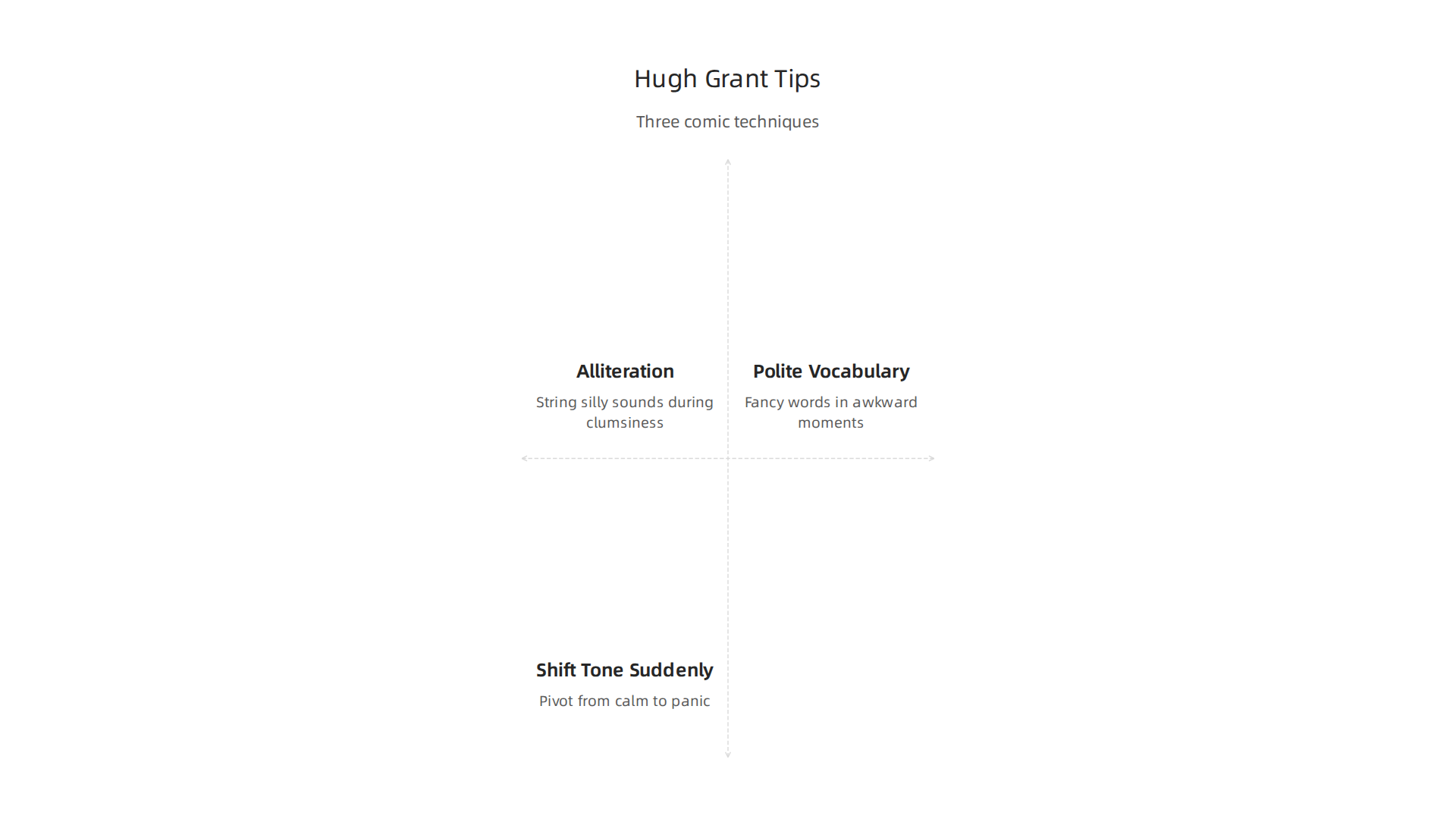
- Use alliteration during clumsy moments. A string of silly sounds makes the line feel more bumbling. Think of a character stammering "bumbling, baffled buffoon" instead of just "I messed up." It sounds funnier.
- Put polite vocabulary in awkward contexts. Have your character use fancy words like "alas" or "indeed" while they are falling over or spilling coffee. The mismatch is the joke.
- Shift tone suddenly. One moment the character is calm and proper. The next they panic and scream. That whip-lash keeps the audience off balance.
According to experts on how to create a comedy character, the richest characters live in the space between how they see themselves and how the world sees them. Grant’s characters think they are in control. They are not. That self-delusion drives the absurdity.
If you want to explore more ways to write strange, charming characters, check out our guide on absurdist humor books that break every rule of storytelling. It is full of examples that bend logic the same way Grant does.
The key is to make the character lovable even when they are messing up. Give them a kind heart beneath the awkward filter. That vulnerability turns their mistakes into something we root for.
Want to see how professional writers turn polite chaos into comedy? Love Absurd Humor? Discover a sci-fi series built on strange logic and smarter laughs.
Summary
This article traces Hugh Grant’s comic career from the floppy‑haired rom‑com lead to a versatile actor who now plays darker, stranger roles while keeping the same awkward charm. It explains the signature "lovable bumbler" persona—privileged men undone by self‑doubt—and breaks down the mechanics behind his jokes: timing, well‑placed silence, micro‑expressions, and sudden tone shifts. The piece also shows how he alternates between straight man and fool in ensembles, why recent parts like Fletcher and Heretic sharpen his absurdist edge, and how that evolution maps onto modern meme‑friendly humor. You’ll learn practical writing tips to replicate his mix of vulnerability and social clumsiness, recognize the British absurdist lineage that informs his work, and discover films that showcase his range so you know what to watch next.