

You might know Chris Pine as Captain Kirk from Star Trek or Steve Trevor in Wonder Woman. He plays handsome heroes and serious dramatic roles. But if you look closer at the list of chris pine movies, you will find something surprising.

A big part of his career is built on weird, silly, and totally absurd comedy.
Think about it. In Dungeons & Dragons: Honor Among Thieves, he plays a bard who is clumsy and overly confident. The whole movie is full of ridiculous situations and jokes that make no logical sense. Then there is Poolman (2024), where he plays a lazy guy who solves a mystery in a very strange way. Even his voice role in Spider-Man: Into the Spider-Verse has a surreal, over-the-top energy. According to the full filmography on Fandango, Pine keeps picking projects that mix action with playful nonsense.
Why does this matter for you? Because Pine’s choices teach us a lot about how surreal comedy works. He takes a serious face and puts it into crazy situations. That contrast is the heart of absurdist humor. His performances show you how to make people laugh without telling a single joke.
In this article, we will break down the mechanics and philosophy behind Pine’s funniest roles. We will look at how he uses timing, expression, and story to create laughs that feel both smart and silly. And we will share practical takeaways you can use in your own writing or comedy. For more examples of this style, check out our list of absurdist comedy movies that defy logic. It will give you even more inspiration.
If you love this kind of strange, clever humor, you are in the right place. Love Absurd Humor? Meet the sci-fi series built around strange logic and smarter laughs.
Many people first saw Chris Pine as the fresh faced Captain Kirk in Star Trek (2009). He looked like a classic leading man. But watch that movie again. Pay close attention to how he delivers his lines. There is a playful energy underneath the heroic pose. That was the first big hint that he could do more than just action.
A recent look at his film choices explains how they stand out for their "depth, range, and quiet intensity." That depth includes a strong comedic side. Pine has openly talked about loving weird projects. In a 2026 interview at Sundance, he said indie cinema is "still alive and kicking." He picks movies that feel unique and strange.
Since Star Trek, he has not been afraid to look silly. In Into the Woods, he sings badly on purpose. In Dungeons & Dragons: Honor Among Thieves, he improvises ridiculous moments. He even made sure his indie film Carousel was shot on actual film because he cares about the art. That dedication makes his comedy feel richer and more real.
If you want to see more actors who use this same strange humor, check out our list of top absurdist comedians who mastered surreal humor on screen. They all share Pine’s willingness to be bold.
And if you love this kind of smart and silly humor, you are in the right place. Love Absurd Humor? Meet a sci-fi series built around strange logic and smarter laughs.
Defining Absurdist Humor and Its Place in Chris Pine’s Filmography
You have probably watched a Chris Pine movie and thought, "Wait, did that just happen?" That is absurdist humor at work.
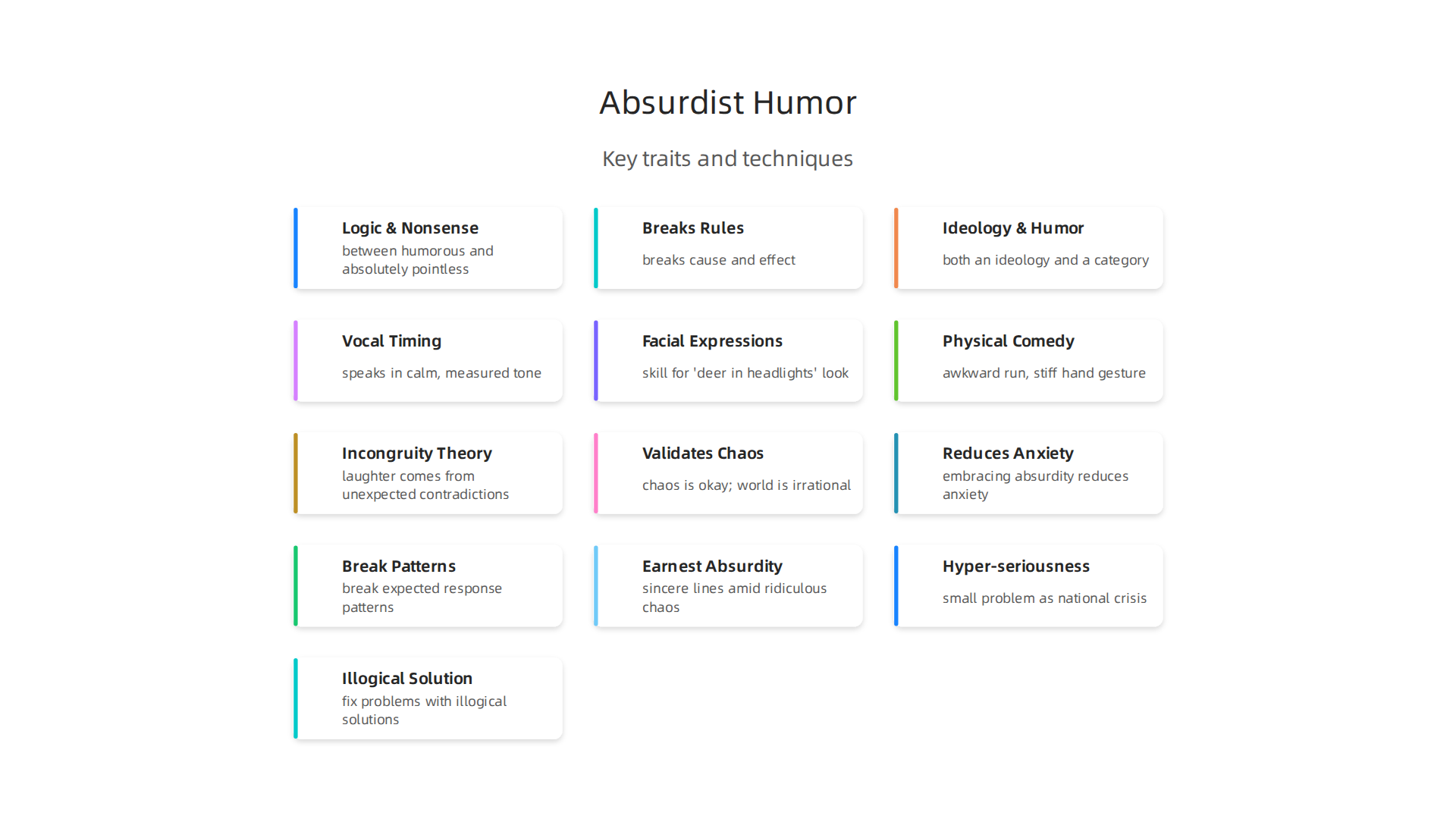
It is a kind of comedy that lives in the space between logic and nonsense. The joke comes from situations that simply do not add up.
According to Beverly Boy Productions, absurdism sits somewhere "between humorous and absolutely pointless." It means nothing and everything at the same time. That strange feeling is exactly what makes it fun.
The roots of this humor come from thinkers like Albert Camus and writers like Eugène Ionesco. They looked at life and said, "Nothing really makes sense, but we keep trying anyway." Wikipedia explains that surreal humour (another name for absurdist comedy) works by breaking the rules of cause and effect. When a movie does that, the audience has to just go along for the ride.
So how does this connect to Chris Pine movies? Look at how his characters act when the world falls apart around them. They do not scream or explain. They just look confused and keep going. That is a classic absurdist move. The Critically Acclaimed website calls absurdism both an "ideology and a category of humor." It forces you to face a simple truth. Life is weird. Pine leans into that.
In Dungeons & Dragons: Honor Among Thieves, his character stays calm while everything goes sideways. In Hell or High Water, he jokes while robbing a bank. The earnest confusion in his eyes is pure absurdist style.
Once you see this pattern, it is hard to miss. It shows up across many absurdist comedy movies that use the same playful logic. And if you love that mix of smart humor and strange situations, there is a whole sci-fi series built around it. Love Absurd Humor? Meet a collection of stories where logic takes a backseat and laughter takes over.
Case Study: The Kobayashi Maru – Absurd Logic in Star Trek
There is a famous scene in Star Trek from 2009 that captures absurdist humor better than almost any other moment in Chris Pine movies. It is the Kobayashi Maru test.
Here is the setup. You are a Starfleet cadet. You get a fake distress signal. You go to help. And then you get destroyed by Klingons no matter what you do. There is no right answer. The test is designed to be unwinnable. That is the joke. You are being judged on how you handle a situation that was built to crush you.
That is pure absurdism. Life sets up problems with no solution. And it expects you to smile through it.
Pine’s Kirk does something brilliant. He does not play by the rules. He secretly reprograms the simulation so he can win.

The film on Fandango shows this was a key moment in his early career. Instead of accepting the no-win scenario, he builds a new set of logical rules.
That is the absurdist answer in action. You cannot win the game? Change the game.
This one scene sets the tone for the entire Kelvin Timeline. Everything that follows runs on the same playful logic. Things break. Systems fail. And the heroes just shrug and try something unexpected.
If you enjoy stories where rules are meant to be twisted, you are going to love an entire collection of tales built around this same idea. Read a comedy where logic breaks and the universe gets weird.
Surreal Turns: Into the Woods, Hell or High Water, and Other Experiments
But the absurdist streak in Chris Pine movies did not stop with Starfleet. Let us look at two more films that show his range.
In Into the Woods, Pine plays Prince Charming. But this is not the sweet prince from fairy tales. He struts around singing about how wonderful he is. The lyrics are so self-absorbed they are funny. You cannot help but laugh at how ridiculous he looks. That is surreal comedy right there. He is playing a joke on the idea of Prince Charming itself.
Then there is Hell or High Water. This movie is a crime drama set in Texas. But it is full of dry wit and situational irony. The characters say deadpan lines that make you chuckle because everything around them is so grim. That is a different strain of absurdity. It shows that Pine can handle both comic and dramatic surrealism.
These experiments prove Pine understands absurdist humor on a deep level. He does not take himself too seriously. In 2024, when his directorial debut Poolman got terrible reviews, he responded with joy and humor. The Independent reported that he called it "the best thing that’s ever happened to me." That is pure absurdist thinking. You cannot win the game? Change the game.
If you want to explore more stories where logic breaks, check out our deep dive on absurdist comedy movies that defy logic. And for a full absurd adventure, start the Absurd Adventure.
Dungeons & Dragons: Honor Among Thieves – The Absurdist Blockbuster
After those smaller experiments, Chris Pine landed a role in a huge blockbuster that let his absurdist side fully take over.
Dungeons & Dragons: Honor Among Thieves is a perfect example of surreal comedy working on a massive scale. The movie follows a group of heroes who are bad at being heroes. They bumble through a magical world that constantly upends your expectations. Every time you think you know what happens next, the movie pulls the rug out from under you. That playful trickery is the heart of absurdist humor.
Pine plays Edgin, a bard who acts as the straight man to the chaos. His job is to keep the group focused. But the movie loves throwing unexpected things at him. A druid turns into a squirrel at the worst moment. A sorcerer keeps messing up his spells. Pine reacts with deadpan frustration. This contrast makes the comedy land harder. As one article points out, Pine is great at changing how we see a typical hero. His Edgin is not about muscles. He uses charm, wit, and genuine emotion. The moments when he gets serious with his daughter hit harder because everything around him is so silly.
This mix of heart and absurdity is rare in big budget films. The movie was a hit with both critics and audiences.

In 2026, it stands as proof that you can be silly and sincere at the same time.
If this blend of warmth and playful logic sounds fun to you, you can explore a whole universe built around the same spirit at doridiculous.com. It follows the same rule breaking approach.
For more on stars who use similar tricks, read our breakdown of how Julia Roberts uses absurdist humor to subvert her own image.
The Mechanics of an Absurdist Performance: Voice, Timing, and Expression
So how does Chris Pine actually pull off this kind of comedy? It might look effortless, but his chris pine movies reveal a careful set of techniques.
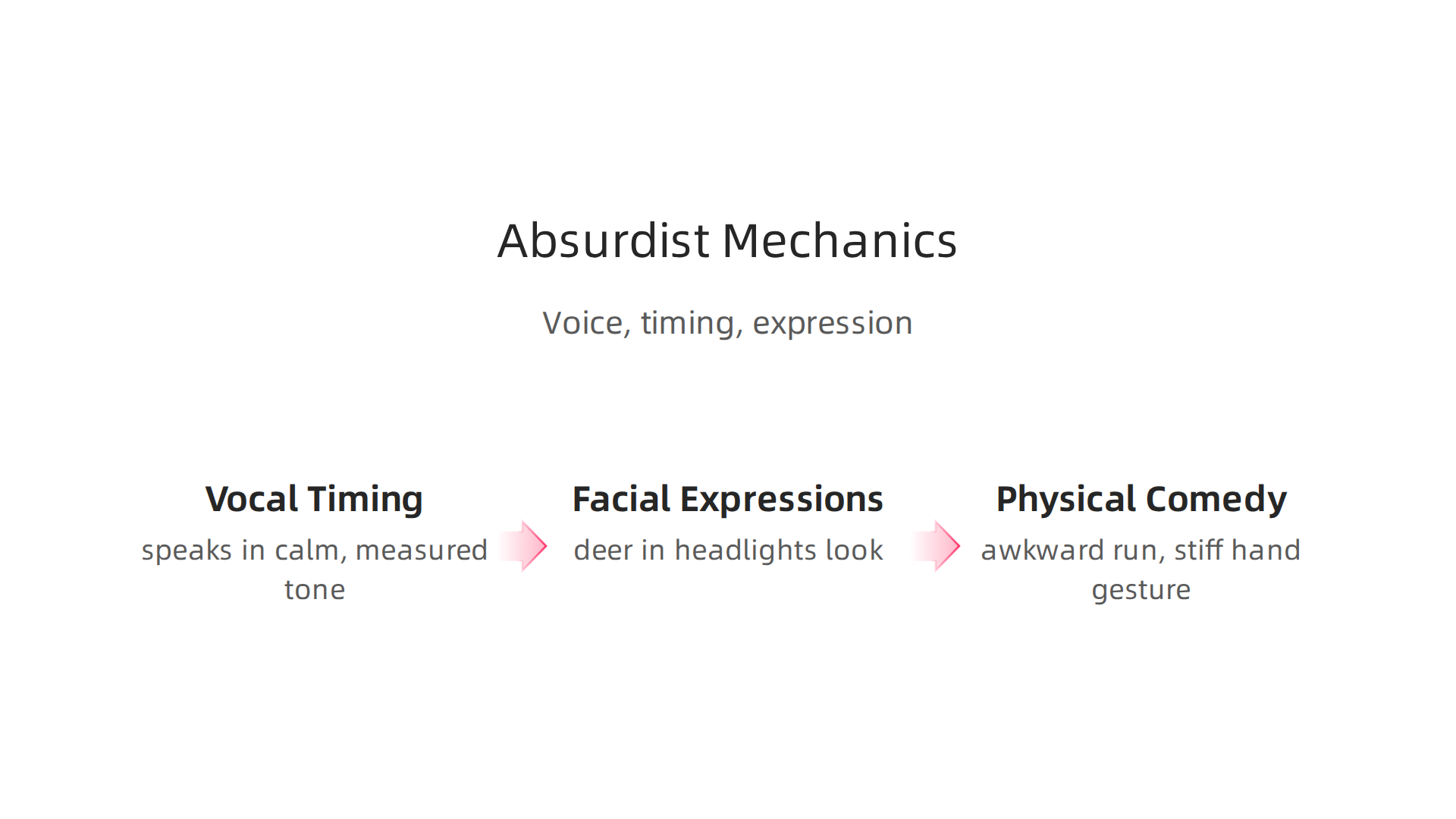
He uses his voice, his face, and his body to create those surreal moments.
First, think about his vocal timing. Pine often speaks in a calm, measured tone, even when the world around him is totally crazy. He will pause at an unexpected moment. He might stretch a single word into a long, awkward beat. This creates a rhythm that lets the joke land harder. As one analysis of absurdist humour explains, effective absurdist comedy relies on deliberate pattern-breaking. Pine breaks the pattern of how we expect a hero to talk. His vocal pauses are like small traps for the audience.
Then there are his facial expressions. Pine has a special skill for the "deer in headlights" look. His eyes go wide. His mouth hangs open just slightly. But here is the trick: he keeps his voice very steady. This contrast, or incongruity, is a classic move in surreal humour. The audience sees panic and hears calm at the same time. Your brain has to work to process the contradiction, and that is where the laugh comes from.
Finally, he uses physical comedy. It is not big slapstick. It is smaller. An awkward run. A stiff, unnatural hand gesture. A slow turn. These moves make him feel like a person who is not quite comfortable in his own skin. The art of absurdity often relies on the unexpected and irrational. Pine’s awkward body language is a perfect tool for that. It makes the silliness feel real.
If you want to see more performers who master this unique blend of deadpan delivery and surreal timing, check out our list of top absurdist comedians on screen.
And if you are curious about how to write this kind of comedy yourself, we have a guide on creating funny footnotes that break the rules of storytelling.
Ready to dive deeper into a world where logic takes a backseat? Read "The Ridiculous" a comedy where the universe gets wonderfully weird.
Why Absurdism Resonates: Psychology and Philosophy Behind the Laughter
Have you ever laughed at something that made no sense at all? That feeling is more than just a giggle.
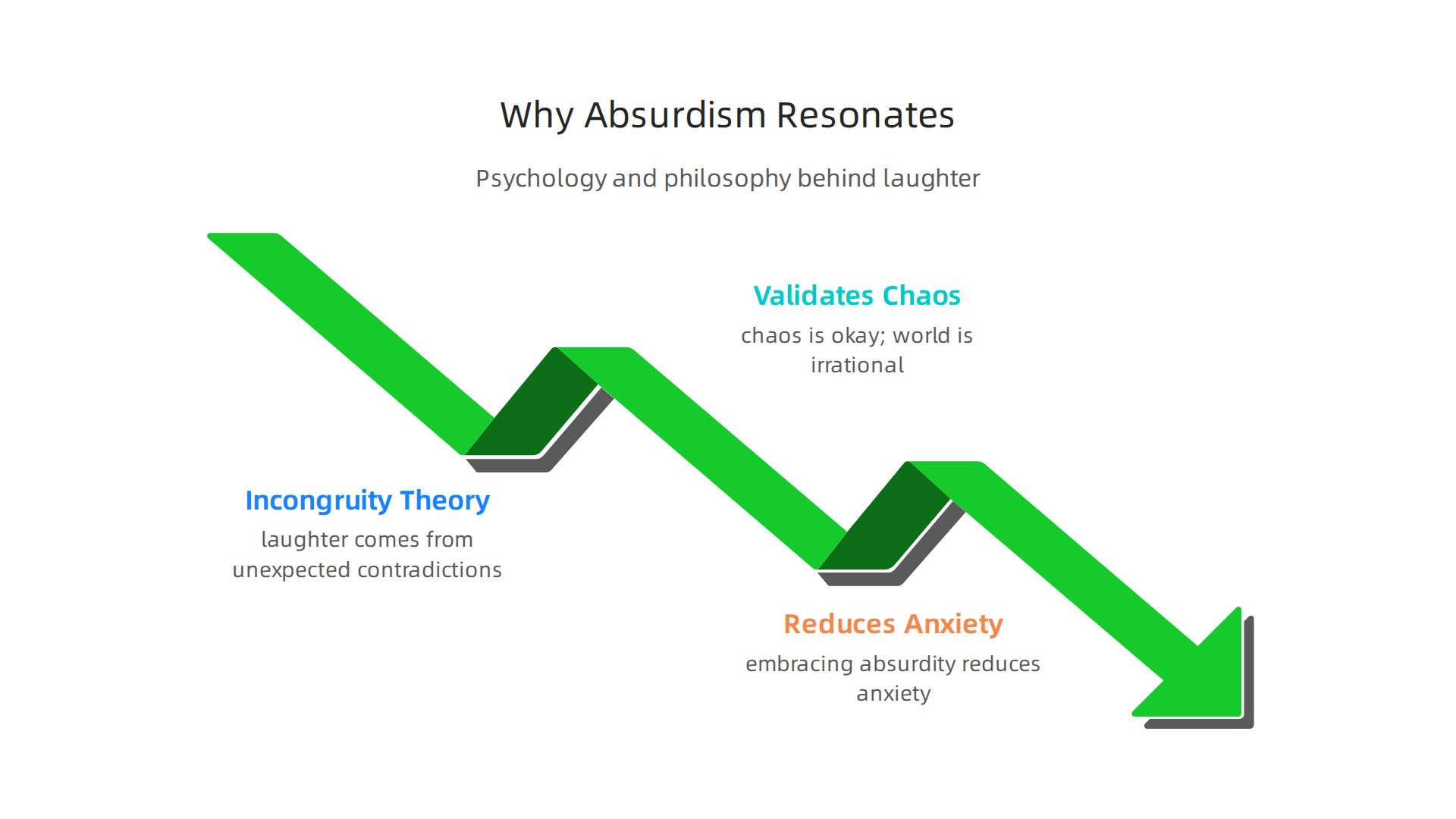
It is rooted in how your brain works.
Psychologists call this the incongruity theory of humor. The idea is simple: laughter comes from unexpected contradictions. When your brain sees a mismatch between what it expects and what actually happens, it releases a little burst of surprise. Research from the Encyclopedia of Humor Studies shows that absurdist humor is closely tied to this concept because it deliberately breaks the rules of cause and effect. In chris pine movies, his characters often act totally calm while everything around them goes insane. That contradiction is pure incongruity. It makes your brain do a double take, and then you laugh.
But absurdism does more than just trigger a laugh. It also speaks to a deeper need. Life is messy. Plans fall apart. Things happen for no reason. Absurd humor tells you that this chaos is okay. As one film analysis puts it, absurdism in film lives somewhere between being funny and being pointless. It validates the feeling that the world is often irrational. Instead of fighting that feeling, absurdist comedians like Chris Pine (and even actors like John Cusack in Being John Malkovich or Michael Douglas in The Game) help us laugh at the confusion. When you laugh at something absurd, you are basically saying, "I see the madness, and I refuse to be scared of it."
This is where philosophy comes in. Some thinkers argue that embracing absurdity reduces anxiety. By reframing chaos as comedy, you take away its power to stress you out. That is why surreal comedy feels so freeing. It gives you permission to stop looking for meaning in every little thing.
If you enjoy that kind of liberating nonsense, you will love a sci-fi series that builds its whole world around strange logic and smarter laughs. Love Absurd Humor? Meet the sci-fi series built around strange logic and smarter laughs. It is the perfect next step for anyone who wants more of that wonderfully weird feeling.
And for more performers who turn life’s nonsense into art, check out our list of absurdist comedy movies that defy logic.
Applying Absurdist Techniques: A Writer’s Guide Inspired by Chris Pine’s Roles
Now that we have explored why absurd humor feels so freeing, let us talk about how you can create it yourself.
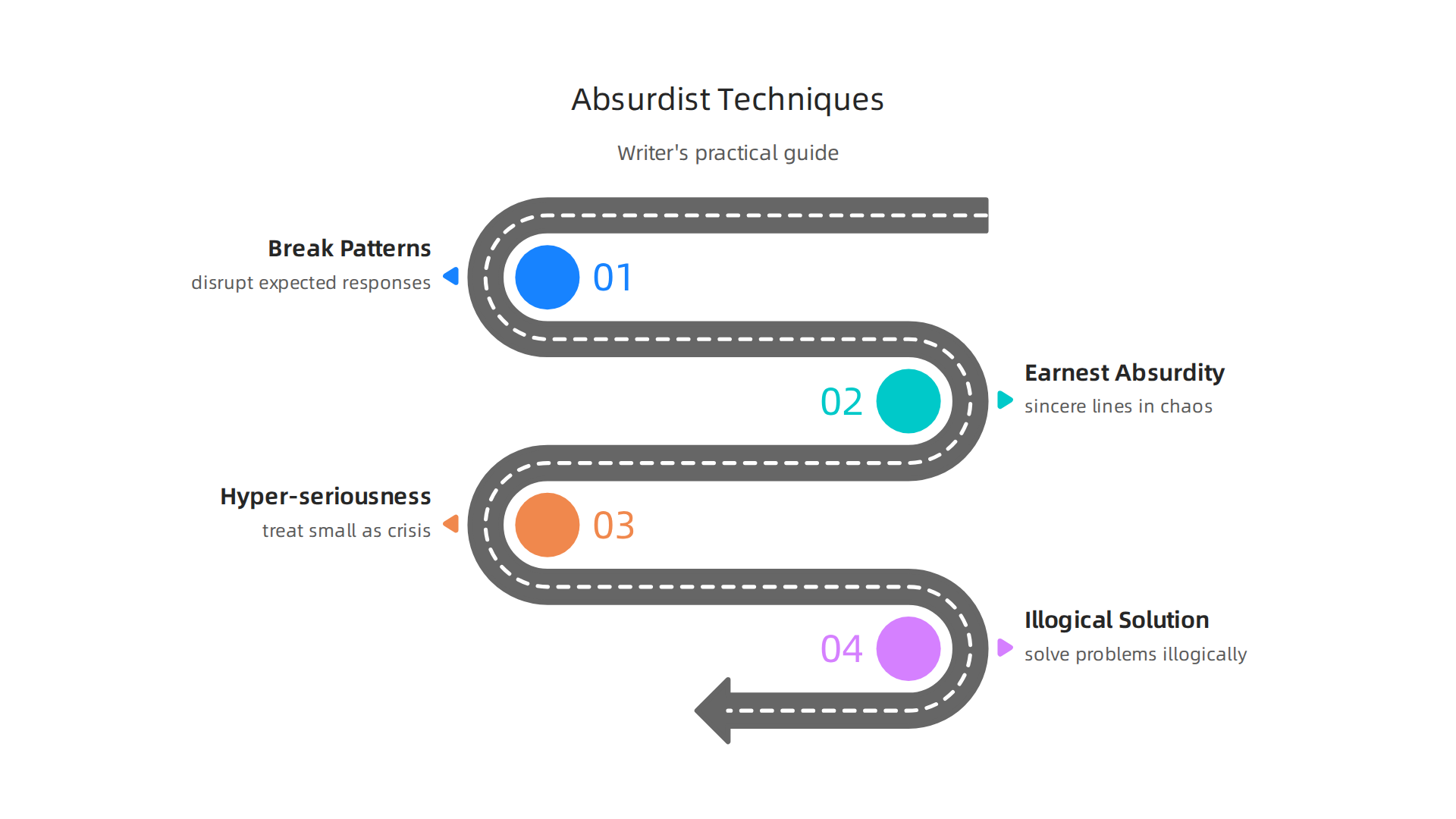
As a writer, you can borrow directly from the techniques used in chris pine movies to make your dialogue and scenes stand out.

The first trick is simple: break expected response patterns. Absurdist humor relies on deliberate pattern-breaking and incongruous ideas, as explained in this guide to absurdist comedy techniques. Imagine a character asks a very serious question, like "Did you save the city?" Instead of a heroic yes, your character answers with a bizarrely literal or totally unrelated reply. This mismatch creates a laugh instantly.
The second technique is what we can call "earnest absurdity." This is where Pine truly shines. His characters often deliver completely sincere lines in the middle of ridiculous chaos. They treat the absurd situation with deadly seriousness. When a character remains fully committed to nonsense, the humor becomes sharper. Comedian Sean Cooper explains that effective absurdist humour comes from violating the rules of cause and effect, just like Pine’s straight-faced delivery in a surreal scene.
Try these practical exercises for your next script or story:
- Hyper-seriousness: Write a scene where a small problem, like a spilled drink, is treated with the gravity of a national crisis. Every character reacts as if the world is ending.
- Illogical solution: Give your characters a problem that makes no sense. Then have them fix it with a solution that defies logic even more. For example, a broken spaceship is repaired by singing the right song.
If you enjoyed learning these techniques, you might like exploring how other actors use similar methods. Check out our list of absurdist comedy movies that defy logic for more inspiration.
And if you want to see these principles in action in a fresh story, read a book where logic breaks and the universe gets weird. Start the Absurd Adventure with a sharp, funny sci-fi tale that turns cosmic confusion into pure entertainment.
Summary
This article shows how Chris Pine—best known for heroic roles—has quietly built a notable streak of absurdist, surreal comedy across his filmography. It walks through key examples (Star Trek’s Kobayashi Maru, Into the Woods, Hell or High Water, Dungeons & Dragons and Poolman), explains the roots of absurdist humor, and analyzes the acting techniques Pine uses—timing, vocal calm, deadpan expression and small physical beats—to make nonsensical moments land. The piece also links the style to comedy theory and philosophy (incongruity theory and absurdist thought) and explains why audiences respond to deliberate nonsense. Finally, it offers practical, writer-focused exercises you can borrow to create your own surreal scenes that feel sincere rather than silly. Readers finish able to recognize absurdist devices in film and use them in performance or writing.