

We have all been there. You are scrolling through your feed, and a funny video stops you cold.
A dog wears a silly hat. A famous comedian says one strange word. The video cuts out. It makes no sense. Yet, you laugh. Maybe you even share it with a friend.
Do not feel confused. You are actually part of a big shift. Hootsuite’s Social Media Trends for 2026 show that this "chaos culture" is dominating our feeds.

It connects deeply with an absurdist sense of humor. People are looking for comfort in the strange and the silly. This is not random. It is a specific form of comedy with its own rules and traditions.
At Absurdist Humor, we love breaking down these rules.
We show how surreal comedy follows a clear path. We explain why strange jokes make us think and laugh. In this article, we will give you a complete tour from definition to creation. You will learn the key principles that make absurdist humor tick and how to use them in your own funny videos. By the end, you will see these clips in a whole new light.
If you want to see a perfect example of these ideas in action right now, you can dive straight into a story built on these principles. Read Book 1 of The Ridiculous series. It is a great way to see the theory come to life.
What Makes a Funny Video ‘Absurdist’? A Clear Definition
Now you have seen how chaos culture is taking over. Let’s get specific. What exactly makes a funny video absurdist? It is not just being random. There is a real structure behind the madness.
At its core, absurdist humor uses logical contradictions and non sequiturs.
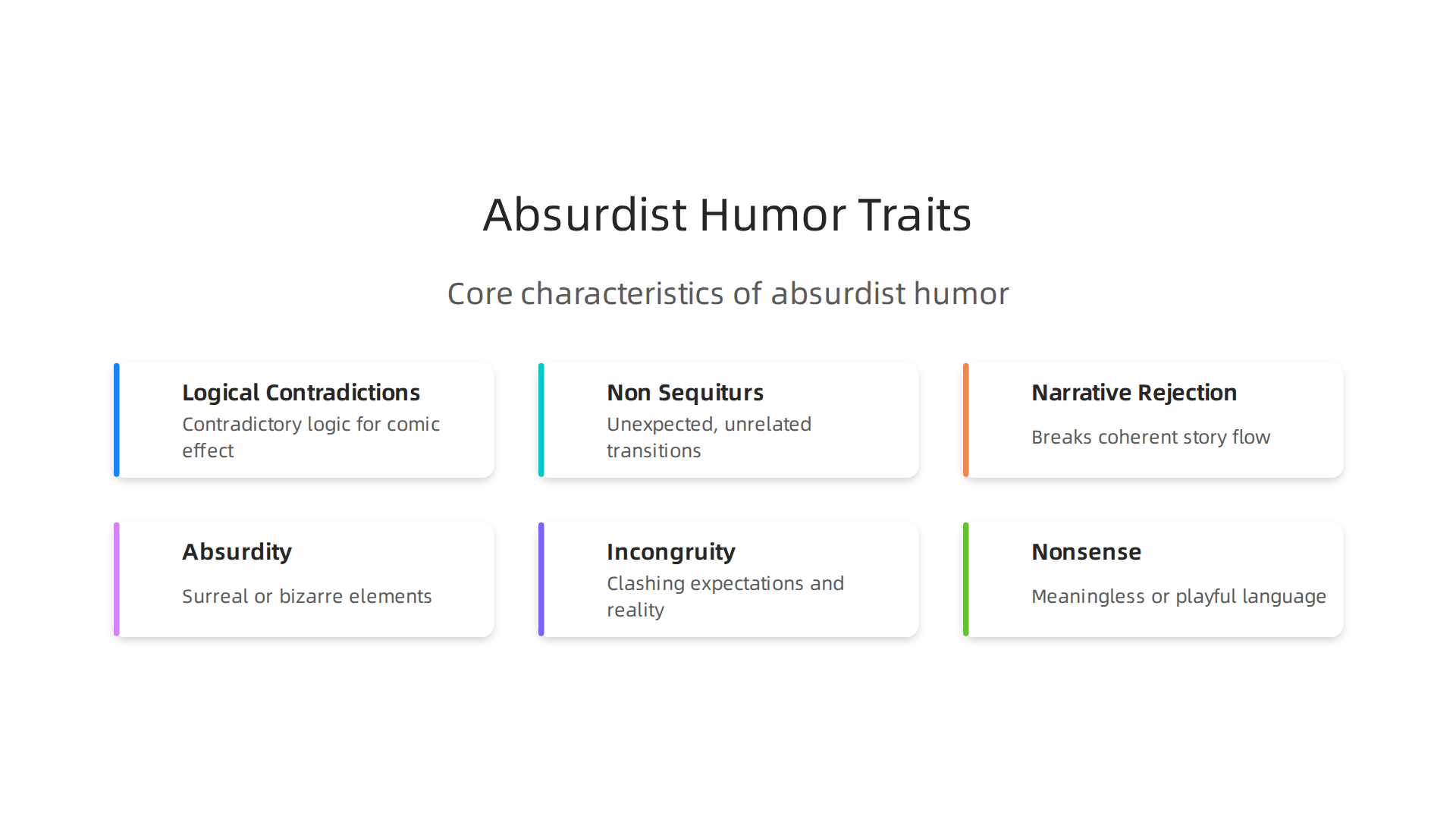
A non sequitur is something that does not follow from what came before. You set up a normal scene, and then something completely unrelated happens. The joke lives in that gap. According to comedian Sean Cooper, this style "implements juxtapositions of uncomfortable imagery and incongruous ideas" and "violates expectations." It takes a familiar moment and flips it into something that makes no sense on purpose.
This sets absurdist humor apart from other types of comedy. Think about slapstick. You watch someone slip on a banana peel. The humor is physical and clear. Or think about observational stand up comedy shows. A famous comedian tells you about the strange things people do at the grocery store. You nod because you have been there. Both of those styles rely on a shared reality with a clear meaning.
Absurdist humor does the opposite. It rejects narrative coherence. It does not try to make sense. It leans into meaninglessness. The Encyclopedia of Humor Studies explains that absurdist humor uses "absurdity, incongruity, and nonsense" as its main tools. Instead of building a joke that leads to a punchline, it builds a world where the rules are broken from the start.
You have definitely seen this in action online. The "This is fine" dog meme is a perfect example.

A dog sits calmly in a burning room and says everything is fine. The image and the caption do not match. The situation is surreal. It is a logical contradiction that makes you laugh because of how wrong it is. Many funny pet videos on TikTok and Instagram use this same trick today. They show animals doing normal things, but with strange sound effects or captions that seem unrelated. The result is a short clip that makes you laugh without knowing exactly why.
If you want to see a list of movies that use this exact framework, check out our guide to absurdist comedy movies that defy logic. It shows how these same principles work in longer stories.
The next time you scroll past a funny video that leaves you confused, stop. Look closer. See if it breaks a logical rule. If it does, you have found absurdist humor in the wild. And if you want to explore a whole universe built around these strange rules, you can View Series of The Ridiculous books. They turn cosmic confusion into sharp, funny fiction.
The Psychology of Absurdist Laughter: Why Our Brains Love Surreal Funny Videos
You know that feeling. You are scrolling through your feed, and a funny video pops up. A cat sits staring at a wall, and then a deep voice says, “This is fine.” It makes no sense. But you laugh anyway. Why?
It turns out your brain is wired to love this kind of surprise. Researchers have studied this for decades. The most popular explanation is incongruity theory. This theory says we laugh when something violates our expectations. A normal scene gets broken by something strange.
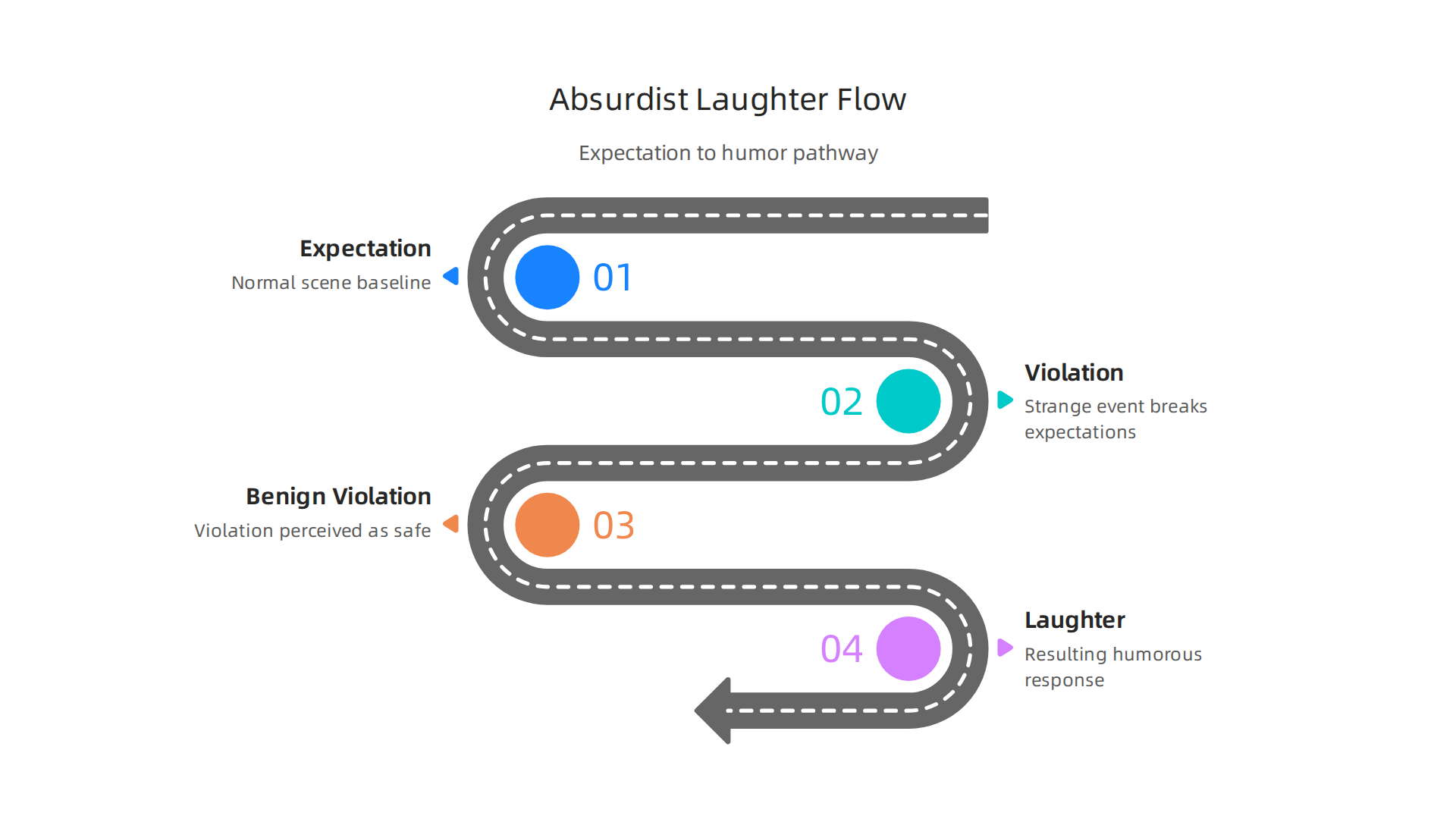
Your brain expects one thing, but gets another. That gap creates the laugh. The Wikipedia page on theories of humor lists incongruity theory as one of the three classic explanations for why we find things funny.
But there is a catch. For a violation to be funny, it also needs to feel safe. That is where the benign violation theory comes in. According to the Humor Research Lab at Colorado, humor happens when a situation is a violation but also seems benign. You watch a funny pet video where the dog suddenly falls off the couch. It is a small violation of safety. But you know the dog is okay. So you laugh. The same thing works for absurdist humor. The joke breaks a rule of logic, but since it is just a video, your brain labels it safe.
Comedian Sean Cooper explains this well. In his post on Three Theories of Comedy, he says absurdist comedy uses benign violation theory to “shatter our rational assumptions.” The violation feels dangerous to our sense of order, but we know it is harmless. That sweet spot triggers the laugh.
Here is the cool part. Absurdist humor actually makes your brain work harder. Because the joke does not follow a normal setup, your mind has to solve a puzzle. It tries to find meaning where there is none. That extra mental effort can make the payoff even more rewarding. That is why you might rewatch a surreal funny video multiple times. Each time, you catch something new. The humor grows.
So the next time a weird funny video leaves you scratching your head, know that your brain is doing exactly what it should. It is enjoying a safe violation for the thrill of it. And if you want to dive deeper into a world where these rules are bent on purpose, you can Explore the Series that turns cosmic confusion into sharp, funny stories.
Key Techniques of Absurdist Video Comedy: Juxtaposition, Anti-Humor, and Non Sequitur
Now that you understand why your brain loves the strange, let us look at how creators actually build these funny videos. Whether you watch funny pet videos or clips from famous comedians, three core techniques power most of the absurd humor you see.

Surreal Juxtaposition
This technique forces two unrelated images or ideas together. The result is cognitive dissonance. Your brain tries to connect them, but it cannot. So you laugh.
Think of a video where a serious documentary narrator talks over a cat failing a jump. The serious voice and the silly action do not match. That mismatch creates the humor. Comedian Sean Cooper explains that absurdist humor uses juxtapositions of uncomfortable imagery and incongruous ideas to break expectations. The Wikipedia page on surreal humour calls this the "effect of the illogical and absurd being used for humorous effect." It is the engine behind so many viral clips.
A common example is editing a celebrity face onto a dancing animal. The image makes no sense, but it feels funny. Your brain enjoys the puzzle of trying to reconcile the two things.
Anti-Humor
Anti-humor is a trick that many stand up comedy shows use. It sets up a joke pattern and then breaks it on purpose. You expect a punchline. Instead, you get something boring, obvious, or anticlimactic.
A classic anti-humor video might show someone building a giant Rube Goldberg machine full of dominoes, levers, and marbles. After a long setup, the final marble rolls straight into a trash can. That is it. No explosion. No big finish. The letdown is the joke. The Psyche article on absurdist comedy describes it as something that "shifts before your eyes and takes on strange, beguiling patterns." Anti-humor plays with your expectations of what a joke should be. It dares you to find meaning in the mundane.
Non Sequitur Logic
Non sequitur is Latin for "it does not follow." In comedy, it means breaking the normal cause-and-effect chain. A character does one thing, and then something completely unrelated happens. There is no logical bridge.
A funny video using non sequitur might show someone pouring a bowl of cereal, then the scene cuts to them riding a horse through a grocery store. The connection is missing. The Sage Reference on absurdist humor notes that absurdity, incongruity, and nonsense are the core characteristics here. The humor comes from the absence of logic.
This technique lets creators take their audience anywhere. No setup needed. Just a jump to a new, strange moment. That freedom is why non sequitur appears so often in internet memes and short clips.
These three techniques do not always exist alone. The best absurdist videos mix them together. You get juxtaposition, followed by a non sequitur, capped with anti-humor. The result is a layered experience that rewards repeat views.
If you want to see these techniques used in full stories, not just short clips, you can Read Book 1 of The Ridiculous series. It is built on the same principles of strange logic and sharper laughs. And if you want to explore how famous comedians have used these tools in film, check out this breakdown of absurdist comedy movies that defy logic from Chaplin to Rick and Morty for a deeper look at the craft.
From Vine Loops to TikTok Surrealism: The Evolution of Absurdist Funny Videos Online
The techniques you just learned about did not appear out of nowhere. They grew up on the internet, shaped by the platforms that hosted them. And the story of how absurdist funny videos evolved is really the story of two apps: Vine and TikTok.
Vine taught us to laugh in six seconds.
Remember "It’s Wednesday my dudes"? That clip is a perfect example. A frog croaks the phrase. No setup. No punchline. Just pure non sequitur delivered in a tight loop. Creators like Jimmy Tatro mastered this format. They used juxtaposition and anti-humor to pack maximum strangeness into minimal time. Vine trained millions of people to expect a laugh every few seconds. It turned absurdity into a reflex.
But Vine shut down in 2017. For a moment, it felt like the end of short-form weirdness. Then TikTok arrived.
**TikTok turned surrealism into a community.
**
The algorithm on TikTok does something powerful. It finds your weird niche and feeds you more. This is where "TikTok surrealism" and "dreamcore" content exploded. Think of videos where a person pours milk on their head while a slowed-down pop song plays. Or clips where everyday objects melt, warp, or float. The Hootsuite Social Media Trends 2026 report calls this "chaos culture" and notes that the nonsensical memes dominating TikTok connect deeply with Gen Alpha’s absurdist sense of humor. These are not random clips. They are a new language of funny videos built on the same benign violation principles that make us laugh at surprise.
Platform features supercharged the weirdness.
TikTok’s duet and edit tools let anyone remix an existing absurd moment. One creator posts a strange video of a dog staring at a wall. Another duets it by adding a dramatic voiceover. A third edits it into a kaleidoscope of dogs. The meme mutates. It grows stranger with each iteration. The Clipchamp blog on TikTok trends in 2026 confirms that these challenges and trends keep the For You Page alive with fresh content every day.
This evolution matters for anyone who enjoys funny pet videos or clips from famous comedians. The same techniques that powered classic stand up comedy shows now drive internet humor at lightning speed. The difference is speed and reach. A joke that took months to write can now go viral in hours.
If you want to see how these principles hold up in longer stories, not just short loops, you can Read Book 1 of The Ridiculous series. It takes the same love for weird logic and builds a full universe around it.
Where to Find the Best Absurdist Funny Videos: Curation Tips for Enthusiasts
The internet is packed with funny videos. But not all of them hit the same way. Some make you laugh for a second. Others stick in your brain for days. The difference often comes down to intentional absurdity versus random noise. Here is how to find the good stuff.
Know where to look.
TikTok remains the biggest engine for surreal comedy in 2026. The algorithm learns fast. Search for tags like "dreamcore," "surreal humor," or "nonsense memes." Then like and share what works. The Hootsuite Social Media Trends 2026 report shows that chaos culture is still alive here, especially with younger audiences. YouTube is another rich source. Many creators post longer videos that break down or build on absurdist ideas. And according to YouTube statistics from Rev, 82% of users come for entertainment. That makes it a great place to find funny videos that go deeper than a six-second loop. Reddit gives you the archives. Subreddits like r/surrealmemes and r/absurdism hold years of curated clips. You can watch the evolution of the form in one scroll.
Spot the difference between chaos and craft.
This is where curation gets tricky. Low-effort randomness looks like absurdism at first. But the best absurdist humor has a reason for breaking logic. It uses timing, contrast, and commitment. When you watch funny pet videos, pay attention to the ones that build a strange little world. A cat staring at a wall for ten seconds with no payoff might actually have a payoff in the context of the clip. The same discipline that makes stand up comedy shows work applies here. Real surreal comedy does not just throw things at the wall. It places each weird piece with care.
Use tools and communities to save time.
You do not have to dig through the feed alone. Curation tools like Feedly and BuzzSumo help you track specific creators or topics.

The guide to the best content curation tools compares options by use case and price. Discord servers and newsletters also help. Many active communities share the best absurdist funny videos every day. You learn from people who already did the searching.
If you want to see how these same techniques play out in longer forms, check out absurdist comedy movies that defy logic from Chaplin to Rick and Morty. It connects classic film to the surreal clips you love today.
Next time you open your feed, you will know exactly what to look for. And if you want to dive into a full story that uses this kind of logic, Read Book 1 of The Ridiculous series. It builds a whole universe around the same playful strangeness.
How to Create Your Own Absurdist Funny Videos: A Practical Framework
You have watched enough surreal clips. Now you want to make your own. The good news is you do not need expensive gear or a big team. You just need a clear approach. Here is a practical framework for creating funny videos that feel intentionally weird, not just random.
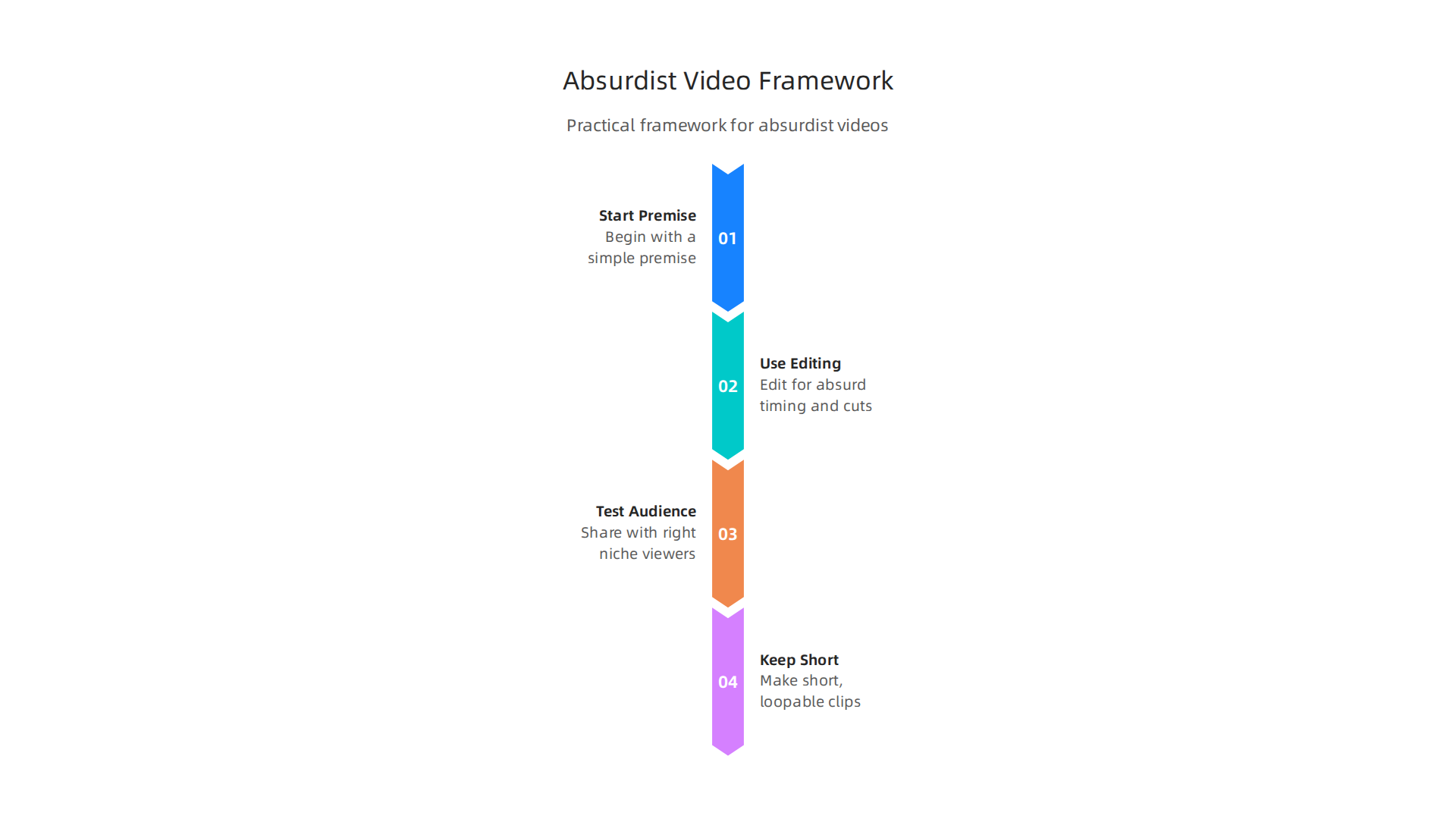
Start with a simple premise and break one rule.
Every good absurdist video begins with something familiar. Then it twists one thing. Think about a character who only speaks in shapes. Or a person ordering coffee who only responds with numbers. The trick is keeping everything else normal. The contrast makes it funny. Famous comedians have used this for years. A grocery store that looks totally real but has a cashier who talks backward. A job interview where the interviewer only communicates through hand puppets. The rule is simple. Pick one logical violation and commit fully. The 2026 Content Trends Every Creator Needs To Know report reminds us that audiences in 2026 crave fresh, rule-breaking ideas. This is your chance to deliver.
Use editing to exaggerate the weirdness.
Your raw footage is only the start. The real magic happens in the cut. Use jarring transitions that jump from scene to scene with no warning. Try green screen backgrounds that do not match the setting. Match audio from a completely different context, like playing dramatic orchestra music over a cat eating cereal. The more the audio and video fight each other, the more surreal it feels. Many creators find that silly funny pet videos get way funnier when the sound does not match the picture. You can also speed up or slow down specific moments to break natural timing. If you want to see how established films use these same editing tricks, check out the techniques behind Dreamworks movies and their absurdist framework.
Test your work with the right audience.
Here is where many beginners trip up. They show their early videos to friends or family who do not get absurdist humor. The feedback is confusing or negative. That hurts more than it helps. Instead, find people who already appreciate surreal comedy. Share your clip in a Discord server or a subreddit dedicated to nonsense humor. Ask specific questions. Does the joke land? Is the rule break clear enough? The surreal comedy approach used by actors like Julia Roberts shows that even mainstream performers rely on testing timing and tone with trusted audiences. The feedback loop helps you refine your timing, your premise, and your commitment to the weirdness.
Keep it short and loopable.
The best absurdist funny videos in 2026 are under 30 seconds. That is the sweet spot on TikTok and Instagram Reels. A short loop lets the viewer watch it multiple times. Each watch reveals a new layer of the joke. The first time they see the surface weirdness. The second time they notice the small detail that makes it brilliant.
If this framework clicks with you, imagine applying it to a full story. Read Book 1 of The Ridiculous series. It does exactly what we just described, using absurdist logic to build a whole universe that keeps surprising you.
Summary
This article explains what makes funny videos ‘absurdist’ and why those strange, non sequitur clips dominate social feeds. It defines absurdist humor as purposeful logical contradictions and harmless violations that trigger laughter, then outlines the psychology behind that response—especially incongruity and benign-violation theories. You’ll learn the three core techniques creators use (juxtaposition, anti-humor, and non sequitur), how platforms like Vine and TikTok shaped the form, and practical curation tips to find the best examples. The piece finishes with a clear, actionable framework for making your own surreal videos—starting with a simple premise, breaking one rule, using bold edits and sound, testing with the right audience, and keeping clips short and loopable. After reading, you’ll recognize absurdist patterns in media and be able to plan and polish your own intentionally weird videos.